Featured

On Further Reflection: Nolo Contendere

With minor revisions, as originally published via THEMUSEUM’s CultKW online magazine on October 6, 2021

Dove, lithograph on paper by Pablo Picasso, 1949 – wikipedia. 

I’ve been trying to abstain from debate.  

It’s not easy. I like to jump into the fray now and then. Fighting with words is my preference — words carefully and deliberately chosen, so with forethought, not in a face to face, spur of the moment confrontation.  

This combative bent has served me well. I was invited to join the Waterloo Regional Arts Council after denouncing, in caustic language, their proposal to revitalize my city’s ailing legacy civic and business district by putting up giant heritage murals, just like Welland, Chemainus and scores of other desperate towns and cities from coast to coast. 

I was invited to write weekly commentary on the regional arts, culture and heritage scene for our daily newspaper after submitting a sequence of op ed pieces expressing my utter contempt for the rhetoric and the actions emanating from Queen’s Park under Premier Mike Harris and his Common Sense Revolution wrecking crew. 

This was a “Second Opinion” piece ridiculing a proposal from one of the global consulting firms to reconfigure our KWS into an Ontario Symphony Orchestra that convinced the publisher to invite me to make a weekly contribution to the paper, which I did for the next 22 years.  

So in a very real way, my belligerence became a gateway to how I ended up earning my bread and butter. And now I’m trying to give it up. 

This is a direction I’ve been leaning toward for some time. It stems from a growing uneasiness with stereotypical partisan stands. I do have convictions, preferences, hopes, loyalties, aspirations and sensitivities. I have learned, however, that taking an aggressive stand diametrically opposed to the convictions, preferences and sensitivities of someone else can backfire: Opponents become more deeply entrenched in their positions, or get drawn into positions that contradict what they originally stood for.  

I have also become aware, lately, of how easily we can get drawn into simplistic pro or con, yes or no, us or them, either/or stand offs. Sometimes we’re enticed into such positions deliberately, to set us against one another, to confuse us, to distract us from what’s actually at stake. But it mostly happens by force of habit.

The idea that political discourse takes place in a kind of arena, with Habs vs Leafs, red-shirts vs blue-shirts locked in endless combat, has become part of how we think, how we try to make sense of our world and our place in it. Watching from the stands can be wonderfully entertaining, and personally participating as a contestant can be a healthy exercise for the body and the mind. But in terms of actually solving or learning anything, gladiator-style debate is usually inconsequential. It can also be deadly dangerous. The issues we’re facing today are of grave consequence. Partisanship has become an obstacle.        

Trying to hold back my pugnacity is not a turn towards a friendlier, more tolerant approach. I haven’t resolved to turn the other cheek against noxious or deceptive ideological positions. On the contrary. Part of the motivation is the realization that we’ve reached the point where certain varieties of wrong-headedness have become an existential threat to all us creatures here below. We can’t afford to treat dangerous perversions of truth with “both sides” politeness or a sporting fair play any longer.

I touched on this subject in two “musings” written for CultKW.com a while back: Beyond Opinion, and Further Beyond Opinion. These pieces began as part of an experiment in refraining from confrontational debate. Both deal with controversy over proposed developments, two high rises and a mega-warehouse; the stories were all presented in the press as parochial opposition to change –  Not In My Back Yard – NIMBY fights.

The point I tried to make is that these are not two-way debates, in which decision makers are expected to choose between a “yes” and a “no” side. What we’re involved in here is a collective deliberation exercise, not a stand-off between opposing forces. These are broad, many-faceted issues. There’s far more at stake than a neighbourhood trying to protect its stability, preserve its character, and the right to quiet enjoyment of their space under the terms that were in place when their homes were initially rented or purchased. The outcome will impact everyone who lives here, today and for generations to come. 

Civic deliberation is best served by avoiding two-way standoffs, and turning, instead, to broadening the range of what warrants being taken into account, thereby complicating the picture. To be effective, inclusive and meaningful, civic deliberation needs to move “beyond opinion”. 

A genuinely civil conversation is, essentially, a learning process: The basic question, as Waterloo Architecture professor Rick Haldenby asked in relation to the condo boom in the older parts of Kitchener, is “What kind of city are we building?” What would be the best possible result, taking every factor into consideration? 

“Where there is much desire to learn,” John Milton famously wrote in Areopagitica, “there of necessity will be much arguing, much writing, many opinions; for opinion in good men is but knowledge in the making.” But opinion from misguided gladiatorial types, including the deceivers and the deceived, is hate, fear, ignorance, schism and violence in the making. 

Stumbling upon a noisy display of hard-hearted opinion can be infuriating. The impulse to flip such offenders the bird, as Uptown Councillor Tenille Bonoguore did back in June, can be irresistable. It is wiser, however, to respond as one would to a highly contagious disease: apply the antidote (good-heartedness really does beat hate, always), but from a distance, with the best personal protective equipment available.       

From Op-ed → Guest Essay 

This new resolve to avoid confrontational positions coincided with the recent announcement that the New York Times is retiring the term “op-ed“.  I was interested to learn that “op-ed”, a term the Times introduced just over 50 years ago, means opinions published on the page opposite the editorials in a traditional newspaper layout. The change is driven by the shift toward accessing the paper’s content online, beyond the physical page. Opinions from outside the Times editorial structure are now called “guest essays”.

I have mixed feelings about this. I think of essays as structured arguments, probably because of the role essay writing had in my high school and post-secondary education: You begin with a thesis statement, and support it with logic and evidence. The goal is to produce a cogent, convincing composition. 

Opinions are softer propositions: the Latin root means from “conjecture, fancy, belief, what one thinks.” When you say “this is my opinion,” you’re saying “I suppose… ,” not “this is absolute Truth” or “here I stand, I can do no other.” 

The word “essay” can also mean trial, attempt, weigh, test, so the distinction may not be as stark and clear as I first thought. But it’s important to see that there is a difference. (These musings, incidentally, are offered as the softest, most free-wheeling of opinions. Let’s stir things up a bit, but playfully, not to make more trouble, of which there is plenty to go around).    

The opinion pages have always been my favourite section of the daily newspaper. This is usually the first place I look. After that, anything with local/regional relevance is of interest; the rest is mostly chaffe. There are many sources for quality news and commentary about Canada, the U.S. and the world at large, but on the local front, the daily newspaper has, until recently, had little serious competition.   

Almost every day, I come across something that widens my perspective, complicates my understanding, and opens possibilities for further thought and action. Increasingly, this tends to be material that reaches me through a friend or someone I follow on one social medium or another, primarily in text form. My own posting and sharing of material has increased in frequency and length throughout the 18 months I remained isolated in my “coop at the co-op.” 

The social media behemoths have been blamed for fostering partisan division, serving as platforms for disseminating what I call “truth splinters”: narrow, partial or perverse views that are readily transfigured into lies and used to foster fear, resentment, judgement and hate. What gets left out can be more significant than what finds its way to our respective feeds. 

Online sources of information offer an hitherto unimaginable wealth of material. With so much food for thought readily available, mostly at no cost beyond what they charge for Internet access, the editorial aspect becomes increasingly important. And it pains me to say it, but right now, my Facebook friends, LinkedIn contacts, and the people I follow on Twitter are doing a better job sorting through the Whole World Wide web and directing my attention to material that can be of practical value for learning, imagining and doing things here in our neck of the woods than what our beleaguered regional daily and weekly papers are able to do. 

When I first encountered the term “editorial product”, it sounded repugnant, partly because it was in something Conrad Black had said. But when I subscribe to — literally, underwrite — the local paper, that’s precisely what I’m supporting: An editorial product, put together by people I can trust to sort through all the material available, and select what can be of good use to me as an engaged citizen of my city and region: Kitchener, Cambridge, Waterloo, Grand River Country. 

When I subscribe to a newspaper or a certain kind of magazine, I’m also underwriting a learning institution. The way Milton explains it, what he calls opinion and I’m calling civic deliberation begins with a desire to learn. When we really want to learn, we open our minds to perceive, proffer and receive knowledge and wisdom. The objective is not to triumph, but to create and recreate something tenable that is also practically useful, drawing on all the facets and slivers of fact, truth and possibility that are within the range of comprehension.   

That includes the kind of understanding that the first National Day for Truth and Reconciliation last week is all about. My sense is that Truth, when we begin to approach it, will not be the final triumph of one conclusion over another — a kind of historical Judgement Day — but suddenly catching a glimpse of the enormity and the complexity of the great historical wrongs that are the foundation of North American culture and society. 
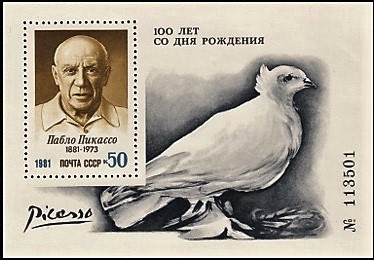
Picasso’s Dove on USSR stamp and souvenir sheet celebrating the centennial of his birth – wikipedia 

Kitchener’s Queen Street Axis

January 15 Original Kitchener, Ontario, Canada

This is a shorter version of an Evening Muse post from December, 2024. It’s about the vitalization of my city’s original civic, cultural and commercial centre, which is something I’ve been interested in since the October, 1993. This was part of a series about “turning the idea of a ‘capital of culture’ on its head, and showing the world who and what we are by working together as the five cities and seven nations of Grand River Country to organize a ‘Culture as Capital ManiFest and Homecoming’ event for, say, 2026 or 2027.”

Bread & Roses Co-operative Homes 307 Queen St S, built 1879

For anything like a Culture as Capital initiative to become a reality, all sorts of ingredients will have to be assembled, while a complex range of factors, wills and energies are mustered, harmonized and set into motion. This will take time. But we don’t have to wait until everything is in place to start actually doing things. The best time to begin is now. The best place is right where you are. And the best way to proceed is step by step, starting with what is immediately achievable.

As a step towards a year-long, watershed-wide “Culture as Capital” manifestation, I propose an experimental “Summer of Learning & Discovery” in an actual place: Queen Street North and South, in the heart of Kitchener.

Because coherence in the watershed and adjacent areas is so weak, the first step towards “Culture as Capital” manifested in real places is best centred around a geography that is more readily reachable in terms of communication, visibility and mobility. The terrain has to be fathomable, and it has to be walkable. There must be assets in place that can serve as a foundation to build on. And there needs to be space to move freely about, with ample room to build and grow. Kitchener’s Queen Street axis meets all these requirements.

An axis is “a main line of direction, motion, growth or extension.” Queen Street as a cultural focal point extends from the Green Gables Guest House, home of Music at Green Gables, down to where what I like to call the Preston-Berlin Rail Trail (officially known as the “Iron Horse”) crosses the roadway, and all that’s within easy reach on foot from any direction, at any point along the way.

Green Gables Guest House, at the top of Queen at Lancaster

There’s a lot to work with in this district, including:

Green Gables Guest House / Music,
KW Art Gallery,
Raffi Armenian Concert Hall, CITS Studio Theatre,
Timothy Schmalz’s Fallen Firefighters Memorial,
Church of the Good Shepherd (Swedenborgian),
Kitchener Public Library Central,
Greater KW Chamber of Commerce,
Holly’s Cafe & Gallery at 27 Roy,
Apollo Cinema,
St Andrews Presbyterian,
St Peters Lutheran,
RoW Headquarters,
Registry Theatre,
Suddaby School,
Governors House & Gaol, including under-utilized porch, courtyard and garden,
Regional Archives,
Heimie Place, Hibner Green, Vogelsang Green, Goudies Lane, Siegner Lane, Clemens Lane,
Conestoga College DTK,
Speakers Corner,
SDG Idea Factory,
THEMUSEUM,
Conrad Centre, Green Light Arts,
The Walper and Crowne Plaza hotels,
three under-utilized 20th-century style parking garages,
a half-empty 20th-century style shopping mall,
The Working Centre,
Historic St Paul’s Lutheran,
St Matthews Lutheran, including the new St Matthews Centre,
Benton St Baptist,
Schneider Haus,
Victoria Park, including Lake, Boathouse, Pavilion, Museum, and Bandstand,
Queen’s Green Community Garden,
REEP House … .

With a radial approach, there is no need to set limits on what can be included, but walkability is paramount. Assets and energies within easy walking distance include:

Kitchener Market,
Willow River Centre,
Rose Cafe, Fresh Ground, Yeti, Serrinia … ,
Crushed Almond, Aura-La … ,
Globe Studios, including CAFK+A, Inter Arts Matrix, Studio 38, Corner Studio,
Courtland School,
Cameron Heights,
Dallas, Wax and Elements nightclubs,
St Mary’s Roman Catholic,
Downtown Community Centre,
St John the Evangelist Anglican,
Civic Hub,
First Church of Christ, Scientist,
Matter of Taste, Pyrus, Lucero, Smile Tiger,
First Church of Christ, Scientist,
Laurier Faculty of Social Work,
UWaterloo School of Pharmacy,
The Tannery,
City Hall,
a second 20th-century style shopping mall, almost completely empty,
44 Gaukel Creative Workshop, Treehaus Collaborative Workshop,
Gaukel Block, Charles Street Terminal, Clock Tower Commons …

and, of course, that marvelous constellation of neighbourhoods that surround downtown Kitchener, including the growing number of “vertical villages” in and near the city’s traditional civic, commercial and cultural centre.

The idea is to develop a program of offerings that have an exploratory or educational component, building on what has already been accomplished and making full use of resources that are currently available within range of this Queen Street axis. It should be activities that require some effort, but that are also for enjoyment more than any kind of practical purpose or benefit. The objective is deepening knowledge and appreciation of our shared cultural inheritance in all its manifestations as an end in itself, for the enjoyment of it.

Some examples of existing programs with an exploratory element that come immediately to mind are:

Juanita Metzger’s Stroll Walking Tours;

Little KW Flamenco Fest, and other CalúJulesFlamenco Plus programs;

the offerings of the Ten C Dance Company in the Market District;

Music at Green Gables;

KWAG’s Culture Talks at the Walper Hotel;

from Inter Arts Matrix, the X-Camera Talks series, and the A Hole in the Ground serial artist residency project in 2023;

our contemporary art biennials, CAFKA and IMPACT, both of which are scheduled to return to Downtown Kitchener and area in 2025,

and the rich range of learning opportunities in Irish Real Life Festival programming.

These are examples, not a complete list.

Daniel Lichti

More than any of the other examples cited above or below, it was Daniel Lichti’s Art of Lied Music Festival and Mastercourse project at St Andrews Presbyterian and other Queen Street North and South locations last July that inspired my thinking in this direction, beginning almost a year ago now, when I first heard about his plans and interviewed him about them for the “community radio magazine” I send out into the world every week.

Other examples that drew my attention for their “learning and discovery” aspects as the summer unfolded include:

Open Ears 2024, a downtown highlight since 1998, which ran May 30 – June 2, and included presentations from

The Creek Collective, a kind of festival within a festival. This was followed by

the AfroVibes Festival June 8 -9, Uptown Waterloo as well as DTK, and

the Grand River Black Music Festival and Conference at KPL Central June 14 – 16.

I was out of town when Mama’s Cookout & Music Festival happened on July 13, but this project of Rufus John’s Freedom Marching initiative applying “the creative power of Art, Education & Activism” also deserves a place on this list.

Capping off an extraordinarily bountiful summer were two more presentations that struck me as full of promise:

Caribana Ignite! along King and from City Hall down Gaukel August 23 -25, the original Caribana Arts Group’s “celebration of the legacy, culture, and spirit of the Caribbean diaspora” as manifested, for the first time, in Downtown Kitchener, and

Black Talk: Hanif Abdurraqib and Antonio Michael Downing in conversation, Textile’s inaugural fall literary event on Sept. 27 up in Waterloo.

To my mind, each of these happenings raised the bar in some way. As we approach the end of 2024 and the beginning of another planetary journey around the sun, let’s take stock of these kinds of accomplishments, and ask: What else belongs on this list? Could these precedents serve as a foundation for future developments?

Now is the time to start thinking about what could be added to these offerings and others like them to create a critical mass that can be presented as an experimental program throughout the May to October planting-to-harvest growing season, if possible, starting in 2025.

How about a “Summer of Learning and Discovery,” with emphasis on exploration and appreciation? Building our appreciation for music, dance, beauty, history, our city, our watershed, our country and for all the cultures that are part of the fabric of our communities.

Meanwhile, doing an inventory of all the resources for learning and discovery available in the area, , including space for gathering, teaching, presenting, screening, discussion and working, would be very useful for the next phase of utilizing, enhancing and building on what exists.

Ordinary People Welcome

originally published Wednesday, August 4, 2021, for CultKW, a project of THEMUSEUM

image from Inten-City Walking Tour of Downtown Kitchener

Last month, I underscored the significance of the “we” in Waterloo Architecture Professor Rick Haldenby’s question: “What kind of city are we building?” 

The present tense is appropriate: What we do now, and in the immediate future, is what matters, simply because now is the only time we can make decisions and begin to act on them. Yesterday is gone; tomorrow may be too late. 

We have some choice in the matter, and, for anyone who chooses to make civic engagement part of their life, there’s a role to play. So the next question becomes: “What kind of city do I want to help build?”

Cities and towns cannot be willed into existence. It takes time: Kitchener, Galt, Waterloo, Preston, Hespeler, New Hamburg or Elmira as they stand today were lived into reality. The building went on, day by day, generation after generation, each in accordance with their particular time: pioneer days; boom years; war years; times that were ripe with possibility; times of fear and hate; times of contraction, of destruction, of depression.

True city-building or “place-making” is incompatible with cock-sure, high modern, “Man and His World” presumption and arrogance. 

So this essay on what kind of city I hope to help build is offered modestly, on a take it or leave it basis. If you take it, in whole or in part, please fold whatever you find useful into your own inclinations and commitments.

As I’ve tried to explain at various points in these posts, I love my city, and I love the urban-rural-fluvial configuration within which Kitchener is a constituent element. This loyalty, this fondness is the closest I’ve been able to come to feeling anything like the “true patriot love” commanded in our confederal anthem, or any inkling of assurance that I have a place to discover, to stand, to grow in “Ontari-ari-ari-o”.

The first notion that comes to mind about what kind of city I want to help Kitchener become is from a recent article about Japanese life today in Nikkei Asia, a news weekly produced by the same corporation that owns Financial Times, the London-based daily. 

Things are hard for many in Japan, especially for older people. According to the article, “15.7% of the Japanese population lives in relative poverty, the second-highest level among Group of Seven nations after the United States.”

How and why so many people in Japan live in poverty is an important question. But what caught my attention here is an advertising motto posted in large letters on the external walls of a “cavernous wholesale supermarket” specializing in cheap staples: “Ordinary People Welcome”.

The Kitchener I know and love has always felt like a place where “ordinary people” could feel welcome, and my hope for the future of my city is that this remains a fundamental part of its purpose and character.

The second notion emerged after I read a recent restaurant review by Jasmine Mangalaseril with the headline Darlise Café poised to embrace downtown’s future (Waterloo Region Record, June 24, 2021). 

It was the optimism of Cafe co-owner and namesake Liz Howie that struck me: Like the Walper Barbers and now the Walper Cigar Shop, this is a business that had to move when a new ownership with a new vision for Kitchener’s landmark hotel took over eight years ago. 

Mangaleseril reports that Howie is 

<< enthusiastic about downtown Kitchener’s future. Even though the pandemic emptied office buildings and temporarily closed shops and community spaces, over the past few months she’s glimpsed the vibrancy that awaits the core.

“My darkest days here during COVID were when I wasn’t seeing anybody. When it first started, it was a ghost town,” Howie said. “My happiest memories of that time were when they did the Art Walk. So many people were here for the first time and then walked around. … Not just King Street: all parts, down the back alleyways and everywhere. It’s a very cool idea.”>>

These comments inspired an optimistic social media post from me that day:

<< I used to go to the Darlise Cafe fairly regularly when I worked next door [at the Commons Studio, above the Queen Street Commons Cafe] and have known the Howies since their days at the Walper. So I’m really glad to learn that they’ve managed to hang in through all the tribulations of the pandemic, and am looking forward to returning, provided we don’t mess things up and allow a fourth wave of this plague to hit our towns and cities.

Like the exiled Walper Barbers, I think of Darlise as a saving remnant of the real Kitchener I know and love: A welcoming community, with no pretensions to being hip, cool or whatever passes for classy at the moment, but a respect for people as they are, a commitment to quality and honest value, pride in craft, and a genuine friendliness that trend-setters and clever marketing types cannot possibly match.

I’m encouraged by the optimism for the future of the historic heart of the city expressed in this article: I’m not espousing a nostalgia for soon to be lost values, but confidence that, regardless of the changes underway, the real Kitchener will not only prevail, but flourish, and be appreciated, even cherished, as never before. >> 

I appreciate what these investors have done for the venerable hotel. Their improvements will help ensure that it remains standing for another 128 years at the junction of Queen and King, where East meets West and North meets South. Together with the freshly and sensitively restored American Hotel, and the majestic CIBC building, this is arguably the most significant concentration of architectural heritage treasures in the city.

But when I go into the newly appointed Walper, I don’t feel welcome or at ease like I do at the Darlise Cafe or in Linda’s chair at the Walper Barbers over on Joseph Street. In fact, given my age, my economic status, my ethnic and cultural background, my personal inclinations, and my memories of the Walper during a time when it was an almost daily part of my life, the renovated public areas of the hotel feel like they’re designed to make me feel estranged, uncomfortable, unwelcome.  

But that’s my problem, and I’ll get over it. The place may feel exclusive, but I know it is open for business, including mine. Resentment, and voluntary exclusion, indicate low self-respect. I am not interested in writing a protest essay, railing against “gentrification”.

But I do think that Kitchener’s extraordinary ordinariness is something worth cherishing and protecting. There were wealthy people here during the city’s formative years. Busy Berlin was a prosperous place. But the rich weren’t ostentatious or pretentious, preferring a plain, firmly grounded style of living. And citizens of modest means lived rich, full lives: The vast majority owned the homes they lived in.

I find the idea of “ordinary people”, and making sure they are welcome, much more appealing than the emphasis on favouring the “middle class” that our current federal government has been making so much of. The “Ordinary People Welcome” sign in the Japanese supermarket is aimed at what we call the poor and disadvantaged — those people, objects of our pity, our charity, and too often, our contempt. “Ordinary”, meaning most of us, not those others, acknowledges that we’re in this together.    

This ordinariness, this lack of pretence and ostentation, is especially noticeable in Kitchener, but it extends to all of Waterloo Country. Hespeler, Preston, New Hamburg and Elmira are similarly modest and unassuming. Galt’s beauty reflects confidence, self-respect and pride of craft more than wealth and privilege. Even Waterloo, for all its uppity, smart city ways, is a down home kind of place, whose small town, countrified roots are never far from the surface. It says something about our region that the classiest, most upmarket area is the Village of St Jacobs in the heart of quilt, maple syrup, summer sausage, horse and buggy, “No Sun Sales” country.         

Mainstream Canadian society has always seemed more stratified than Waterloo County was and remains . But in relative terms, compared with the two global empires that we’ve been living in the shadow of from the beginning, Canada is a land of “ordinary people”. There’s nothing like the class-ridden society of the English motherland, nor are we cursed with the intricacies of the U.S. caste system based on race and ethnicity. 

The association of the arts and even heritage with class distinctions is one of the things that makes culture-related advocacy work so difficult here in Kitchener, and throughout Waterloo Country as a whole.

One of my first introductions to the Waterloo Regional Arts Council was a presentation to a municipal task force decrying the association of culture with lowly concerns like parks and recreation, including a particularly memorable line about “conducting the KW Symphony with a hockey stick.”

I also remember a manager of an important arts organization, freshly arrived from Toronto, contemptuously dismissing his new home as “just a hockey town,” and promptly moving to Guelph.  

You cannot be an effective leader or manager in the Greater Waterloo cultural sphere without being aware of, and respecting, this “ordinariness”.  

Kitchener’s plain, unpretentious nature doesn’t align with the hard hat and lunch bucket stereotype familiar from big city media. It includes that commitment to quality, honest value, and pride in craft I mentioned earlier. And it includes culture: all those choirs; all those orchestras, chamber groups, citizens bands, amateur theatre traditions; it includes that vital musical theatre scene.

I remember, not so long ago, a survey that asked Kitchener citizens what public service they valued most, and the public library came out on the top of the list — ahead of police services, the fire department, parks, and the arena. That was a proud moment for me as a Kitchener citizen. 

So what can I do to make sure that the city I know and love remains a place where “ordinary people” can feel welcome?

To begin with, I’m proposing we make this part of who and what we imagine we are: a fundamental component of our identity, purpose and character.

We can explore, deepen and strengthen this identity through almost any kind of civic engagement. But I’d really like to go beyond lobbying the city to do things on our behalf. 

I have a half-baked idea about a kind of “Friends and Neighbours” club with a local civic engagement focus.

What I’m imagining is tailored to the original Kitchener, i.e.  all parts of the city that were laid out and built up before 1950 or so. But it could be done in any city or town with an authentic foundational core. And for people living outside the core, this is just as much their city as it is for those of us who are fortunate to live here.    

I’m thinking about a process through which we keep asking ourselves what kind of city we’d like to build; set some personal objectives, and find people to talk, work, learn and get around with. 

-*/

Among other things, I’d like to find a way to welcome every one of those 6000 new neighbours who will be moving to the city’s legacy civic and business area as those construction projects reach completion, one after the other. I’m proposing we welcome them in person, as citizens, as they arrive, and offer them opportunities to get involved with their new community. 

I’d also like to find ways to join hands in supporting ordinary people friendly downtown businesses like the Darlise Cafe, Matter of Taste, Legacy Greens, Full Circle, Cafe Pyrus, The Yeti, the Kitchener Market food court vendors, Ellison’s Bistro, East African Cafe, Rainbow Caribbean, Queen Shawarma & Kabab, Mi Tienda Latina, Walper Barbers, Walper Cigars, KW Bookstore, A Second Look  … . 

I’d like to see the Queen Street Commons Cafe back in business, the only open, public “third space”  food and beverage facility I know of where everyone, ordinary, privileged or troubled, is truly welcome.  

By the same token, this civic association I’m imagining would look for ways to support, and take full advantage of,  all those modest-scaled, grass roots culture-related endeavours I mentioned in my last column, like the Registry Theatre, Globe Studios, Inter Arts Matrix, Textile Magazine, Kwartzlab, Green Light Arts …. and help launch a dozen or more additional projects for all those new downtowners to get involved with. 

The kind of city I’d like to help Kitchener become will be true to its origins, and respectful of its heritage, but comfortable in the present …  and forward looking — i.e. progressive: “characterized by advancement, going forward, moving onward”.

My Kitchener is finally ready to move beyond the debacle of 1916; embrace veteran artist Edward Schleimer’s “spirit of Berlinnova;” and stake our claim as the birthplace and capital of allophone Canada, multicultural Canada, racially diverse Canada. The city I hope to help build is ready to re-dedicate itself to the honour and memory of the other Lord Kitchener, the great 20th-century Calypsonian, lightly, with humour and flair, but fully cognisant of what a profound and thoroughly progressive change this could help bring about. 

If you’re interested, please see my mid-August and top o’September 2020 CultKW posts Kitchener and Kitch.


A July First to Fourth Notebook

As originally submitted and posted for CultKW on July 7, 2021.

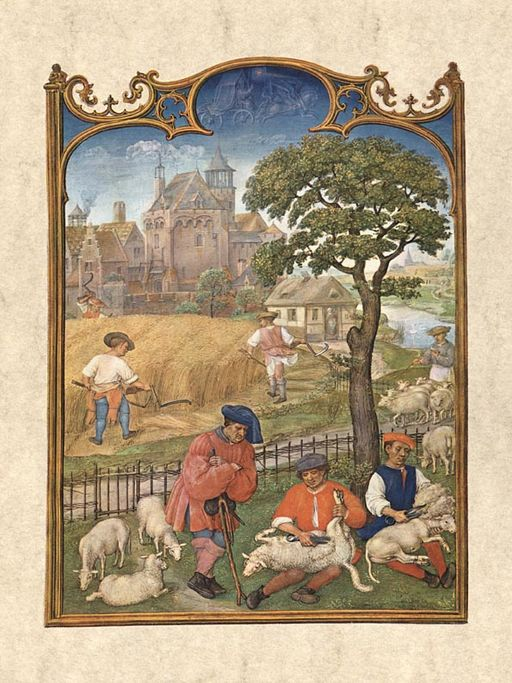
July, Brevarium Grimani, (Flemish, circa 1510) wikipedia

Here in Laurentian Ontario, the May “Two-Four” weekend is firmly established as a seasonal turning point, with emphasis on gardening, agriculture and outdoor recreation. I’d like to propose imagining the July First to Fourth stretch as a counterpoint, with emphasis on the various states, nations and federations on both sides of the long, traditionally peaceful border Canada shares with the U.S. of A. 

Outrage

I spent a lot of my July First to Fourth this year online, furiously posting. It began with a response to a friend’s denunciation of what he saw as “deliberately timed vandalism in Victoria Park:” the pouring of blood-red paint over the statue of the park’s namesake monarch on Canada Day. 

“I’m with you,” I wrote. “This is utterly deplorable. And, as we can see from some of the comments on your post, this isn’t going to stop.”

The incident happened a couple of blocks away from where I live, work and muse nowadays. I found some of the comments, on my friend’s wall and in other posts, terrifying. There are a disturbing number of voices who sound like they are ready to pull down all statuary, burn down churches, raze cemeteries, and hang the Pope for good measure. 

This particular monument was erected in 1911, 10 years after the death of the Empress, in what was then still the Town of Berlin, Ontario. I’m not sure why I’ve grown so fond of it over the years. It is certainly not out of respect for the original purpose. On the contrary; what I find moving is how little remains of what I imagine those loyal, dutiful Daughters of the Empire had in mind when they decided to commission this work, and install it for posterity — i.e., for us. 

I’ve suggested, in these musings, an adaptive re-use of the meaning of this and other remnants of empire and monarchy: They could have a fresh relevance, in Canada at least, as symbols of progress through peaceful transition. To me, they represent evolutionary adaptation, building on, with and through what exists. I prefer to treat them as symbols of what I hope is a rising spirit of “never demolish,” as opposed to the ceaseless disruption, erasure and destruction that has characterized British and U.S. Columbian culture and society since the days when Victoria ruled.    

But, like words and storylines in general, such vestiges can mean whatever we choose. If people want to use these relics as a touchstone for a latter day “live free or die” revolutionary republicanism, that’s their prerogative. 

Over and above whatever political meaning it may carry, the monument that was vandalized on Canada Day also has a more neutral aesthetic and cultural heritage value. It is an imposing presence, skillfully rendered in handsome bronze. The work has held up miraculously well over the years. But this artifact was not made to withstand willful destruction. It needs protection:

“It might be better,” I went on in my post, “if Cavaliere Raffaele Zaccaquini’s landmark sculpture of Victoria and the Lion were removed for safekeeping until the current beeldenstorm blows itself out. It is terrifying to see that it is even starting to take on some of the anti-Catholic zeal that drove my ancestors into such a frenzy during the original iconoclastic fury. After what happened last week [long story], I don’t trust the City of Kitchener with safeguarding heritage. Maybe this vulnerable, 110 year old public art work can be stored in the old armoury building in Galt, or the nearest pre-Confederation fort built to protect us from this kind of Boston Tea Party / Rebel Yell / Storming the Capitol red republican style of hooliganism.”

Inlaws and Outlaws

The assault on Victoria’s person cast in bronze was still on my mind three days later, when a friend and colleague sent me an early morning Independence Day greeting: “Happy July 4 if We were American.”

My first thought was: 

“But we are American. We just didn’t take the separatist route. The proper way for a True North North American to observe July Fourth is to think lovingly of our long lost sibling, and promise not to be overcome with jealousy when the prodigal returns home”.

An hour or so later, I followed up with some additional thoughts:

“Ah, but it’s not so simple. We grew up and also left home eventually. The difference is that we have kept a loving, respectful relationship with the elders, despite how mean and cruel they have been known to be. We even keep celebrating great-great-great-great grandmother’s birthday, and smile in front of her tombstone in the park, regardless of how haughty, grumpy and humourless she could be, and how she never once came to visit us.”

The third installment gets darker:   

“But that’s not really how it happened either, is it? Brother Sam and his Abrahamic brood returned home long ago. Or did we move in with them? I don’t remember exactly. Either way, where we live is actually nothing like a cosy family home. It is more like a vast ranch. A plantation, you might say. With mines and oil wells scattered among the cotton, tobacco and indigo fields. Together, we’ve built a family business empire with a global reach. The sun never sets on our domains. The meanness, the cruelty aren’t just a quirk among the old and frail. It’s a family trait. We share a special talent, a gift, for theft, fraud, murder, subjugation, plunder and rapine.

Two or Three Trains Running

I’d written a gentler version of the same story the day before, inadvertently on another friend’s timeline, something you should only do when you’re sure the imposition is welcome. In this case, I’m not sure. 

This version of the tale began as a response to a Canada Day reflection on the “colonial train” we’ve all been riding on since 1867. My friend’s words were thoughtful, compassionate, hopeful: It was about how we are moving forward to something better. . 

“Love the train metaphor,” I answered. “I agree, there is no going back. Living is forward motion. My version of the story (which I’d recently summarized on my personal website) varies slightly. It might not be a truer picture, but it helps me keep my hopes up. In my telling, it goes something like this:

In Canada, it is actually the independence train that has been running for 154 years. Similarly, in the U.S. it’s the Settler Home Rule Express that has been in operation for 245 years now. Both trains are sleek, modern, efficient. Both have, until recently, been steadily accelerating.

These national railways carry almost all the wealth, power, glory and influence that exist in their respective territories. And they’re intricately segregated according to class, occupation, age, education, race, ethnicity, language, accent, religion, tastes, preferences, proclivities, etc., etc. There are passenger cars, sleeper cars, dining cars, freight cars, coal cars, tanker cars, and even “concentration” cars full of people who have been forced to come along for the ride. 

Both trains were built to run over everything that lies in their paths. They’ve become a danger to the very ground we live on. Mercifully, these parallel state railway operations appear to be slowing down. The view out the window isn’t as blurry as it was a while ago. 

We, the living, are the paying passengers. And we are actually in charge. We just don’t seem to realize it yet. We appear to be unaware that if we want to stop this juggernaut, and change its purpose and direction, all we have to do is pull the emergency cord and reset the controls.

We don’t have to blow anything up, hunt down the owners and the management, or hang the conductor, the brakeperson and the engineer. We just have to make some adjustments.

But there are certain interests and mindsets who feel threatened by passenger rights, freedoms and powers, especially the freedom to associate. And they’re doing everything they can to keep us distracted, confused and anxious. Above all, they want to keep us divided.

In my story, there is also a colonial/imperial train that has been chugging along for 529 years. It is ludicrously old-fashioned, rickety and slow. It still carries negligible quantities of wealth and glory, but no real power or influence. The freight it carries is mostly antiques, souvenirs, mementos, curios, bundles of paper, fading photographs, rusty statues and other such bric a brac. 

There are a few living humans on board, oddly attired with crowns, jewels, sceptres, swords, sashes, garters and such. For the most part, however, this is a train filled with ghosts, skeletons and crematorium ashes. No one is in charge. We have no power or influence there. But that’s not a  problem: This train will come to a halt on its own accord. I suggest we let it rest in peace.” 

Epilogue

There, I’ve had my say for another July First to Fourth season of nationalist and federalist celebration and contemplation.

I don’t really expect to win anyone over to my peculiar way of telling the story, nor do I care very much if people choose to carry on with what looks to me like battling ghosts and skeletons. 

But I do want to make it clear that, by looking for alternatives to words like “colonialism” and “decolonization” when discussing the challenges before us, and by smiling a little when I look up, way up, to that bronze memorial to the Empress Victoria around the corner, I’m not signalling that I’ve gone over to the dark side.

There are no sides. Fear, hate and resentment are not forces to be reckoned with, tit for tat. They are an emptiness that begs to be filled, a void that is ready for light. 

Ringo Starr, who turns 81 today, has the right idea: Peace and love, that’s about all there is to it. Here’s a personage whose radiant influence over the years may well have exceeded that of the Empress Victoria at the apex of her glory. The former Beatle doesn’t live in England anymore, so his “peace and love” birthday wish is actually California dreaming. Well, God save Ringo. Long may he shine.   


Ringo Starr’s public art installation; image via Beverly Hills Police Department


The Tusculum portrait, a marble sculpture of Julius Caesar. wikipedia

P.S.: An anti-imperial, decolonizing afterthought

With all this purging, purifying, renaming and graven image smashing going on, why do we remain so content with carrying on with the ancient practice of naming two full months, ⅙ of the days of our lives,  after two of the most notorious dictators, conquerers, colonizers, prison builders, slave hunters, culture destroyers and heaven stormers of all time?  

To quote another California dreamer, in this case an early adopter of the inter-planetary fantasies of Elon Musk (“Hijack the Starship”):

Two thousand years
Two thousand years
Two thousand years
Of your Goddamn Glory*

If anyone wants to pour red paint over the memory and legacies of Julius Caesar and Caesar Augustus, I wouldn’t utter a peep.  

If someone were inspired to lead a march to restore a pacific, decolonized Quintilis and Mensis Sextilis to the contemporary summer calendar, I may join the procession. 

Beyond Opinion 2

This is a revised version of a contribution to THEMUSEUM’s now defunct CultKW project originally submitted May 21, 2021, presented here for the record.

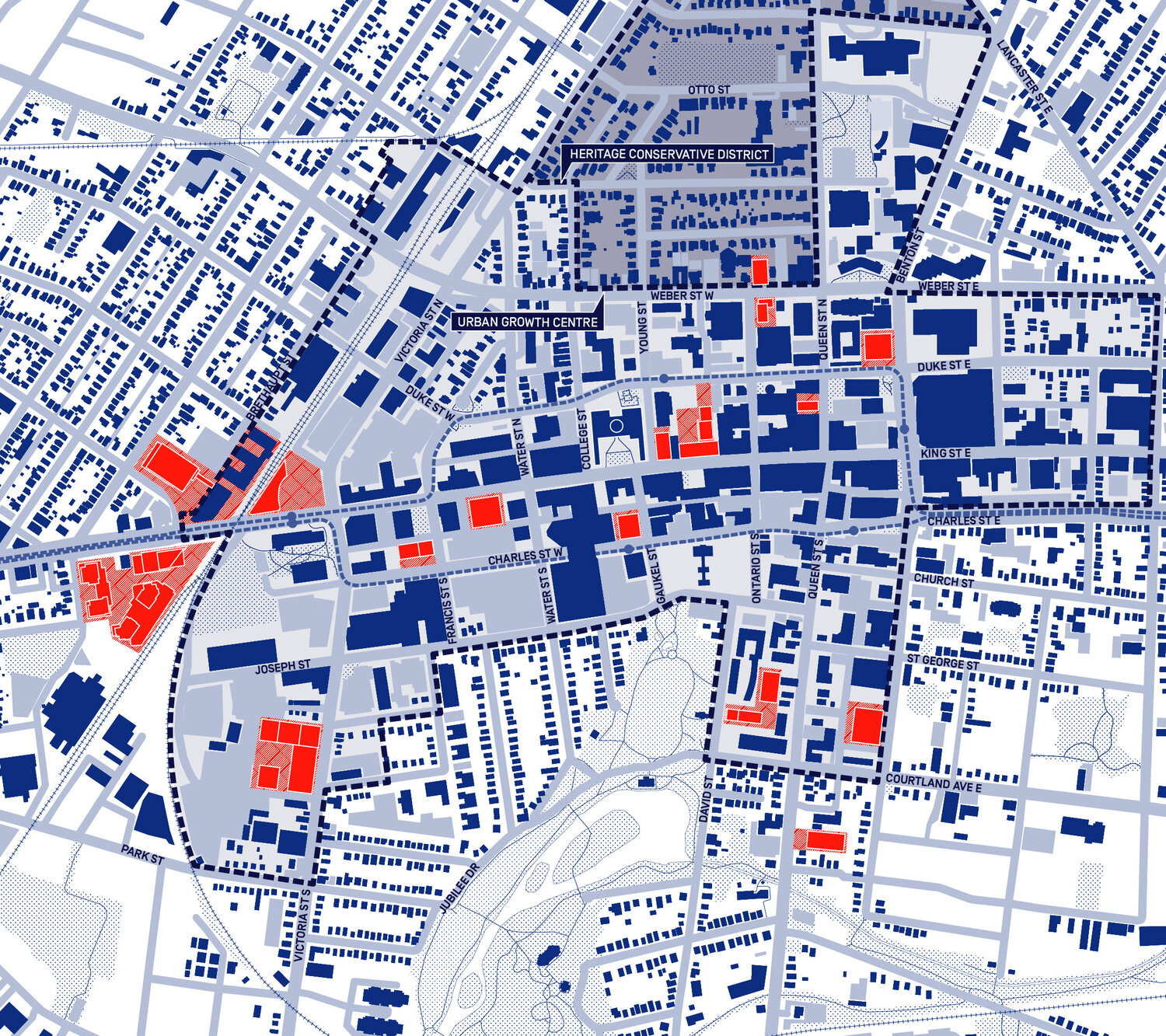
The streets of Kitchener built up to 1953, when the characteristic squiggly suburban road pattern started to become dominant. Image is a screenshot showing layers covered by the interactive Kitchener Historical Street Project, created by the University of Waterloo Geospatial Centre.

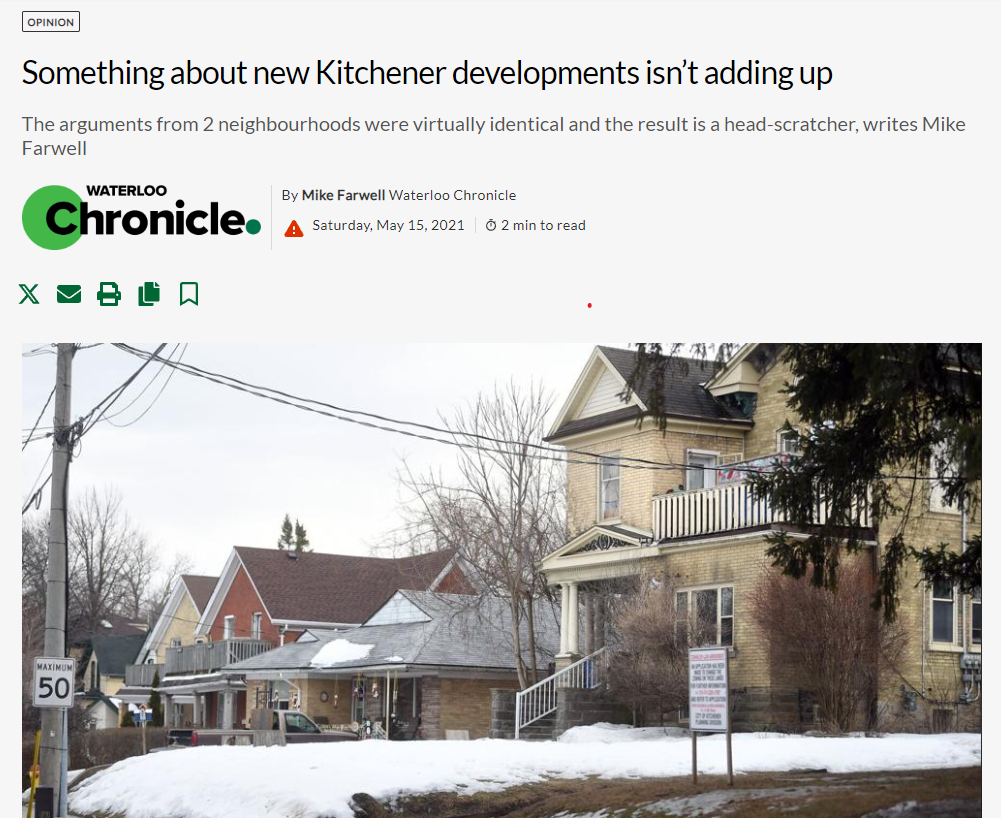
It was a Waterloo Chronicle article that reached me via therecord.com that set off my musings for this week: an opinion piece by local Barnbuilder and media personality Mike Farwell that raises questions about some recent planning decisions.

What caught my attention, first of all, was finding this essay about two controversial Kitchener highrise projects in Waterloo’s weekly. Is it the KW Chronicle now? If so, people in Waterloo should complain. What’s happened to the Kitchener Post? K-townsfolk should be concerned. 

This touches on my opinion, which I’ve expressed repeatedly in these missives, that KW-centricity doesn’t serve any of the region’s eight polities very well, and that it is the people of Kitchener who have been short-changed the most.      

I also have an opinion on the issue that Mike Farwell raises. He’s right, the story as he tells it doesn’t add up: If, as he contends, the “arguments from both neighbourhoods were virtually identical”, the decision to allow the highrise at Frederick and Avon to go ahead while scaling back the development at Queen and Mill is indeed “a head-scratcher”.

Farwell tells the story the same way The Record editorial on the Blair situation does: The three situations are all treated as NIMBY stories, neighbours rising up against a proposed change to say “Not In My Backyard”. But in the case of the village of Blair and the development at Queen and Mill, it is more than just the neighbours who have come forward to express concern. 

Blair, as I suggested two weeks ago, is arguably the most significant heritage precinct in all of Waterloo Country. Mill Street is one of Kitchener’s original roads, adapted, they say, from an Indigenous trail pre-dating colonial settlement. In both instances, voices from all over the region concerned about heritage conservation and appreciation have been speaking up. 

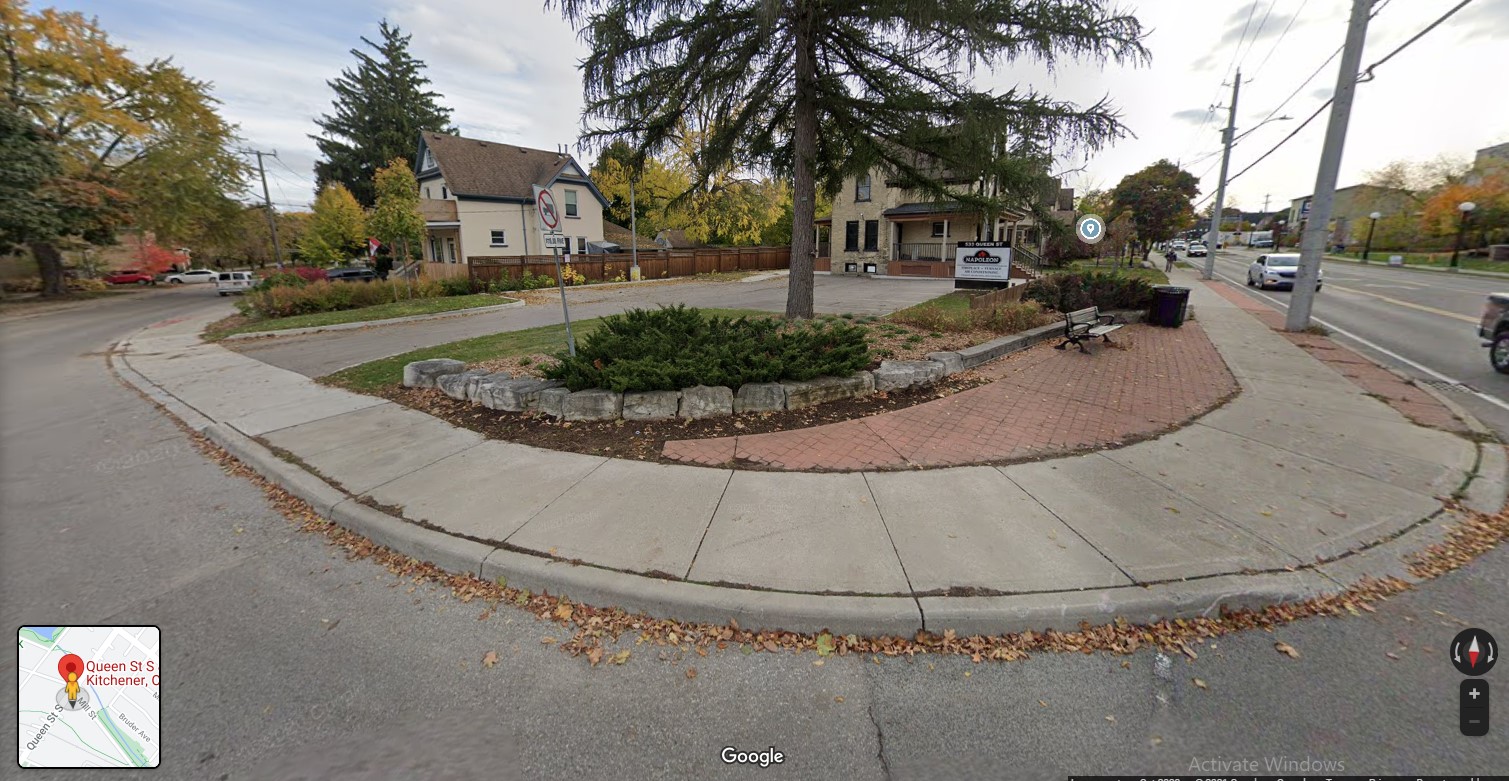
Mill and Queen looking south — Google street view screenshot
I’m certainly concerned about heritage conservation, but haven’t said anything in public about the Mill Street situation. This is partly because the respectful side seemed well-represented. I’m also familiar with the developer. I can see the Polycorp offices from the south windows of my coop at the co-op, situated in a magnificent “Original Kitchener” heritage structure. I hoped, and trusted, that they cared enough to at least listen to our concerns.

But the main reason I kept mum is because I’m a firmly convinced and deeply committed “conservatory progressive”. 

As a progressive, I know time doesn’t stand still. There is no going back to some imagined golden past. It is today that matters, in relation to tomorrow: The future will be the world we choose to make it, or what we allow to happen.

If this forward-looking attitude sounds reasonable, my “conservatory” bent may not: I’m not just calling for the protection of a few exceptional architectural gems from the ravages of heedless profit-seeking, neglect and time. I’m anchoring my hopes for the future on an imminent emergence of a profound respect for all heritage, cultural as well as natural.  

The corner of Mill and Queen lies within what I like to call “Original Berlin/Kitchener”. Every village, town and city founded 100 or more years ago has a foundational core: Basically, this means all precincts that predate the rise of standard suburban growth patterns centred around the automobile. 

Just as we now have a “Countryside Line” to protect the waters, the farmlands and the forests of Waterloo, I’m advocating for an “Original Town Line”, with distinct planning practices for contiguous areas built before 1950 or so, as well as special consideration of everything that has been built since then.  

It’s not that one is better than the other; it’s that they’re different. The suburbs are designed for getting around in cars; the older building patterns are suited for people walking, cycling and for slower, mostly horse-drawn traffic. 

And whether it’s within the Original Town Line or beyond, my preference is for the kind of “socially conscious and sustainable” building design that is practiced by Anne Lacaton and Jean-Philippe Vassal, whose work has been honoured with the 2021 Pritzker Architecture Prize. 

When I heard about “their reverence for pre-existing structures, conceiving projects by first taking inventory of what already exists”, and their resolve to avoid any and all demolition, the thought that immediately came to mind was: “This is the future.”   

Such views, however, are only just beginning to emerge. My sense is that entering the fray over the future of Blair or the junction of Queen and Mill with a battle cry like “never demolish” would likely do more harm than good to the cause. 

So instead of taking a side, I’m returning to the point I tried to make two weeks ago: This isn’t a battle. The objective is the best possible outcome for the village or neighbourhood, for Cambridge and for Kitchener; for the people of the region today, and for people who will live, work, play and learn here throughout the rest of the century and beyond. These are not matters for debate, but for patient, comprehensive and considerate deliberation. 

Civic deliberation, which in this context means democratic deliberation within a municipality and/or a watershed, is best served by avoiding any kind of two-way standoff, and starting by broadening the view of what needs to be taken into account, thereby complicating the picture.

To be effective, inclusive and meaningful, civic deliberation needs to move “beyond opinion”. 
Mike Farwell’s essay got me thinking, and I appreciate that. Rather than challenge his view that Mill and Queen is a better location than Frederick and Avon for density, the intention here is to complicate the picture, not only by drawing attention to the heritage factor, but also by raising the the fundamental question that Rick Haldenby of Waterloo Architecture is going to address in his upcoming for Kitchener Public Library: “What Kind of City Are We Building?”

Let’s do it for Canada. Let’s do it as Canada.

As originally submitted for publication by CultKW, a project of THEMUSEUM, on June 17, 2021.

John Gast’s painting of “Manifest Destiny”, “American Progress” or “Spirit of the Frontier” — wikipedia

Canada Day is coming up soon, preceded by the rest of the “Celebrate Canada” events recognized by the Department of Canadian Heritage.

It begins with National Indigenous Peoples Day, on the summer solstice. 

The traditional Quebec holiday known as Saint-Jean-Baptiste Day, now Fête nationale du Québec, happens June 24th. 

June 27 is Canadian Multiculturalism Day. 

Before Brexit, I thought Victoria Day — Fête de la Reine — could be added to the lineup as a celebration of British Canada. Now I like to think of it as a kind of Fête nationale d’Ontario. 

There’s also Waterloo Day, June 18, the anniversary of the final defeat of the self-crowned Emperor Napoleon. It’s as good a day as any to celebrate this country as “the land of the Canadas,” of towns, cities, and other human habitations grounded in place.

Juneteenth — June 19 — has emerged as another celebration, in this case of emancipation form slavery in the United States with a Texas focus. The counterpart here, in the Caribbean and other parts of the world, is the anniversary of the abolition of slavery in the British Empire on August 1st, 1834

These are all full of promise as celebration opportunities. However, it has become increasingly clear, year by year, that there are matters that need to be considered, studied and adjusted before we can celebrate Canada and its constituent elements with anything like the confidence, pride and joy that was prevalent during the centennial, 54 years ago.

One of those urgent priorities was eloquently and movingly summarized by Senator Murray Sinclair shortly after the news broke about the discovery of unmarked graves of 215 children on the grounds of Kamloops residential school.  

My last column ended with a resolve to “keep a hopeful, prayerful silence” in the wake of the news from Kamloops.1 

The hopeful aspect was the clinging to the possibility that the discovery may prove to be the turning point for facing the truth and moving toward reconciliation. I explained that prayerful side of the resolve was to make my comments about Canada’s relationship with Indigenous peoples a kind petition, not to any political leader, but “to my fellow citizens here on this ground”:

Let’s, once and for all, come together, regardless of our various ethnic backgrounds, faith traditions, political leanings and economic situations, to support one another in finding the courage to face the truth, accept our complicity, shoulder the responsibility, and get to work, each in our small corner, according to our own lights, doing everything in our personal power to make this right.   

I’m writing with the question “what can a poor boy do?” still top of mind. What can this old, poor white male (he, him) settler Canadian of Atlantic European extraction do to help make this right?

Not much. But I’m confident that we can do what needs to be done together, as a people. We can lead, and when we do, the governments will follow. 

In the wake of recent developments, following a precedent set in Vancouver, Canada Day celebrations have been cancelled in Wilmot Township. It was Canada Day in Wilmot, a committee that, according to a recent communication, “supports reconciliation and is working toward the direction of the two row wampum,” that made the decision to hold back on the celebrations this year. 

As Wilmot Councillor Angie Hallman, who chairs the group, has explained, “It’s a one-year pause to respect grieving Indigenous people in our community. … One year without fireworks is compassionate and appropriate.”  

A public statement from the committee proposes, much like I did two weeks ago, quiet reflection, taking reconciliation to heart, and making it personal:  Together, Canadians must do more than just talk about reconciliation; we must learn how to practice reconciliation in our everyday lives – within ourselves and our families, and in our communities, events, governments, places of worship, schools and workplaces. And most importantly for all of our children and future generations.

Meanwhile, there are reports that the Township has also decided to leave the statue of Canada’s first Prime Minister in storage indefinitely, which may mean a merciful end to the Prime Ministers Path project in Baden. In Toronto, the new beeldenstorm, which I’ve been observing with ancestral terror and dismay, has extended its fury to a statue of Egerton Ryerson at the university named after him. 

“You can feel change coming like a train rumbling toward you,” Luisa D’Amato comments in the Waterloo Region Record. “In this time of grief and rage and reckoning, neutrality cannot exist.” D’Amato goes on to ask: “How long before the other statues representing the rotten foundations on which this beautiful country is built must come down too, so we can understand ourselves better?” 

I’m not neutral, but I’m not fully in line with any prominent current position either, especially any stance determined to separate the sheep from the goats. If you say “neutrality cannot exist,” you’re suggesting this is the direction we’re headed. I hope not. The greatest danger we face is the prospect of, again following the U.S. example, forming two hostile, irreconcilable camps and fostering a culture of fear, blame, hate and violence. 

I haven’t changed my view that targeting long gone personages like Ryerson and Macdonald to carry the blame is a distraction from the main concern, and a hindrance to facing the truth. In terms of what it implies for Canada, we’ve reached what looks like an impasse. This isn’t just a stain on an otherwise glorious national record. It is Canada itself that is at stake here. 

That’s why, in my “petition” last week, I wrote “let’s do this for Canada … and let’s do it as Canada.”  

I recommend the long view of the history of Canada in part because the achievement of home rule here 154 years ago no longer looks like such a great accomplishment. From an Indigenous perspective, settlers in power spelled disaster here in the True North strong and free, just as it did after settlers in the 13 rebellious colonies declared their independence 90 years earlier. The settler republic set patterns of continental nation-building that Canada has been following almost to the letter, and this remains the dominant pattern to the present day. 

And yet, I wouldn’t describe such foundations as “rotten.” To begin with, a “country” is more than just whatever the current arrangements are for managing the day-to-day affairs of a modern nation state. Our “beautiful country” is the land, the waters, the peoples and our cultural inheritance, not a constitutional order. We have been making progress here in Canada, real progress, not just the old-fashioned “man and his world” dominion over the lands, waters, plants and animals kind of progress. The fact that we’re finally getting around to facing this problem is in itself evidence of this. 

Looking back needn’t involve longing for a return to some lost ideal. And self-loathing will not help us accomplish anything. There are some saving graces in the story of Canada, especially continuity over time, peaceful transition and an emerging good will. We know better, and can do better than our forebears did during the years when Macdonald, Laurier, King, Diefenbaker or Trudeau Sr. presided over our parliament.To build on what has been accomplished so far, what we need is hope, confidence and a firm resolve.  

The overarching truth that needs to be addressed is not connected to the sins of any particular individual, or malevolent government policy, or the ancient ways of kings, empresses and popes, but the frontier spirit of manifest destiny, dominion from sea to sea, and “go west young man”: i.e. the distinctly North American conception of progress as expansion, mastery, exploitation and extraction.

The widely popular painting by John Gast at the top of this post shows how “American Progress” played itself out as the republic fulfilled its destiny. The image is equally applicable as an allegory of how this Dominion has been expanding from sea to sea to sea. The driving force was not old-fashioned colonial aggrandizement, but high modern nation-building in two independent settler democracies.    

To reconcile, we’d be wise to go back to the beginning. This means, as the Canada Day in Wilmot group has sensed, starting to work “toward the direction of the two row wampum.” 

This would take us to 1613, 254 years before the achievement we celebrate on Canada Day, and 163 years before the events our cousins to the south celebrate on July 4. It takes us to the development of an understanding between people of the Haudenosaunee Confederacy, and a few adventurers from the United Provinces of the Netherlands who had come to set up a factorij — a trading post — on a great river that would give them access the interior of Turtle Island. 

According to an Oneida source, Two Row Wampum Belt “symbolizes the agreement and conditions under which the Haudenosaunee welcomed the newcomers to this land.” It was, and remains, an understanding, starting with an insistence that this is a relationship between equals standing on the same ground:

You say that you are our father and I am your son.” We say, ‘We will not be like Father and Son, but like Brothers’.” This wampum belt confirms our words. These two rows will symbolize two paths or two vessels, traveling down the same river together. One, a birch bark canoe, will be for the Indian People, their laws, their customs and their ways. We shall each travel the river together, side by side, but in our own boat. Neither of us will make compulsory laws or interfere in the internal affairs of the other. Neither of us will try to steer the other’s vessel.

This is not a deal or a contract; it is a framework for a relationship. The British continued to endorse this framework after they seized New Amsterdam, just as they carried on with the various understandings that defined the French presence on Turtle Island before the fall of Quebec. The silver Covenant Chain is one of the foundations of Canada as it has evolved over the centuries, so called because when silver starts to tarnish, all you have to do is polish it. It is the antithesis of “rotten”.

via University of Windsor
The long view from here also encompasses the Dish With One Spoon principle about how land can be shared to the mutual benefit of all who live on it. The concept, which goes back at least to 1142, was an important part of the Great Peace of Montreal in 1701.

I claim no special knowledge of these concepts, but a naive view may have some advantages. To me, these understandings seem profound, wise, more relevant than ever before, and full of promise. 

In the case of the Two Row Wampum, it means mutual respect, peaceful coexistence, and a brotherly, sisterly kind of friendship. 

One Dish, One Spoon addresses “our collective responsibility to each other and the Earth: we should take only what we need, leave enough for others, and keep the dish clean.” 

None of the parties involved with these original understandings over time —  Haudenosaunee, Anishnaabe, British, French, Netherlanders, Yorkers, Bostonais, Québécois 2  — were able to consistently live in accordance to their true meaning. But the agreements still stand, especially here in Canada, where we’ve never overthrown a government or broken completely with the past. While all those atrocities were happening, we still polished that silver now and then, scarcely knowing what this actually meant. Two Row and One Dish, One Spoon are part of what we are, and may hold the key to get beyond the impasse we’ve reached as Canada Day 2021 approaches.  

I’m talking about the view from here, in Laurentian Ontario; things look different in Pacific Canada, Newfoundland, Nunavut, or in the territories around Hudson’s Bay that were owned by the great fur corporations and then ceded to the settler dominion, or in Jamaica, Trinidad, Louisiana, Texas.

This is not the whole story. But as a Canadian who lives, works, ponders and associates in the Great Lakes region of the interior of Turtle Island, I’d happy to cling to Two Row and One Dish as our equivalent of the Magna Carta, our Declaration of Independence: time-honoured wisdom that explains to the world who we are, why we exist as a distinct landed sovereignty, and what our purpose, mission and, hopefully, destiny is for the 21st century.

This is the kind of purpose and mission we can take home to Wilmot, to Kitchener, to Hespeler, to Maryhill, to St. George, to Paris, to all of Grand River Country, a land within a land within a land. The land immediately around us can be imagined as a bowl within the larger bowl or dish covered by the Great Peace of Montreal signed on August 4th, 320 years ago. 

One thing this poor boy can do is propose we add August 4th to the “Celebrate Canada” sequence.  

The image is copyright, so I’m not going to include it here, but check out this map of One Dish, One Spoon country from The Common Pot, by Lisa Brooks.    

1 This Time It’s Different – Thursday June 3 2021

Today marks the first anniversary of the Kitchener Solidarity March for Black Lives Matter, which gathered near the entrance of Victoria Park to form the procession that began to move at 5pm.   

By terrible coincidence, there will be a vigil tonight at 7pm in the Clocktower Common area behind that same Victoria Park entrance in memory of the 215 children found buried in an unmarked grave on the grounds of Kamloops Residential School in British Columbia, Canada. 

A year is not very long. There was a feeling among Black communities in the United States that this time it would be different. I still live in hope that the reaction to the murder of George Floyd will prove to be the turning point in facing truth and moving toward reconciliation. 

The discovery in Kamloops is graphic evidence of how, here in Canada, from coast to coast to coast, from the day we established home rule until very recently, Indigenous lives have not mattered, not even the lives of little children. 

This is too solemn an occasion for carrying on with playful musings or smart aleck pokes at familiar national storylines. Today, I’ll keep a hopeful, prayerful silence.

2 Here’s the list of signatories for the Peace of Montreal in 1701 (wikipedia):

  • Haudenosaunee
    • Onondaga, Seneca, Oneida and Cayuga, represented by Seneca orators (Tekanoet, Aouenan, and Tonatakout) and by Ohonsiowanne (Onondaga), Toarenguenion (Oneida), Garonhiaron (Cayuga), and Soueouon (Oneida), who were signatories.
    • Mohawk, Teganiassorens
    • Sault St. Louis (Kahnawake) Mohawk, represented by L’Aigle (The Eagle)
    • Iroquois of La Montagne, represented by Tsahouanhos[6]
  • Amikwa (Beaver People), represented by Mahingan, and spoken for by the Odawas in the debates
  • Cree, or at least one Cree band from the area northwest of Lake Superior
  • Meskwaki (the Foxes or Outagamis), represented by Noro & Miskouensa
  • Les Gens des terres (Inlanders), possibly a Cree-related group
  • Petun (Tionontati), represented by Kondiaronk, Houatsaranti and Quarante Sols (Huron of the St. Joseph)
  • Illinois Confederation, represented by Onanguice (Potawatomi) and possibly by Courtemanche
  • Kickapoo (attendance is disputed by Kondiaronk)[6]
  • Mascouten, represented by Kiskatapi
  • Menominee (Folles Avoines), represented by Paintage
  • Miami people, represented by Chichicatalo
  • Mississaugas, represented on August 4 by Onanguice (Potawatomi)
  • Nippissing, represented by Onaganioitak
  • Odawa
    • Sable Odawas (Akonapi), represented by Outouagan (Jean Le Blanc) and Kinonge (Le Brochet)
    • Kiskakons (Culs Coupez), represented by Hassaki (speaker) and Kileouiskingie (signatory)
    • Sinago Odawas, represented by Chingouessi (speaker) and Outaliboi (signatory)
    • Nassawaketons (Odawas of the Fork), represented by Elaouesse
  • Ojibwe (Saulteurs), represented by Ouabangue
  • Potawatomi, represented by Onanguice and Ouenemek
  • Sauk, represented by Coluby (and occasionally by Onanguice)
  • Timiskamings from Lake Timiskaming
  • Ho-Chunk (Otchagras, Winnebago, Puants)
  • Algonquians
  • Abenaki, represented by Haouatchouath and Meskouadoue, likely speaking for the entire Wabanaki Confederacy[6]

Great Peace of Montreal with the signatures. If we take this to be our Declaration of In[ter]dependence, this “Outilirine Chief”, who may have been signing for the Cree people, can be our John Hancock.

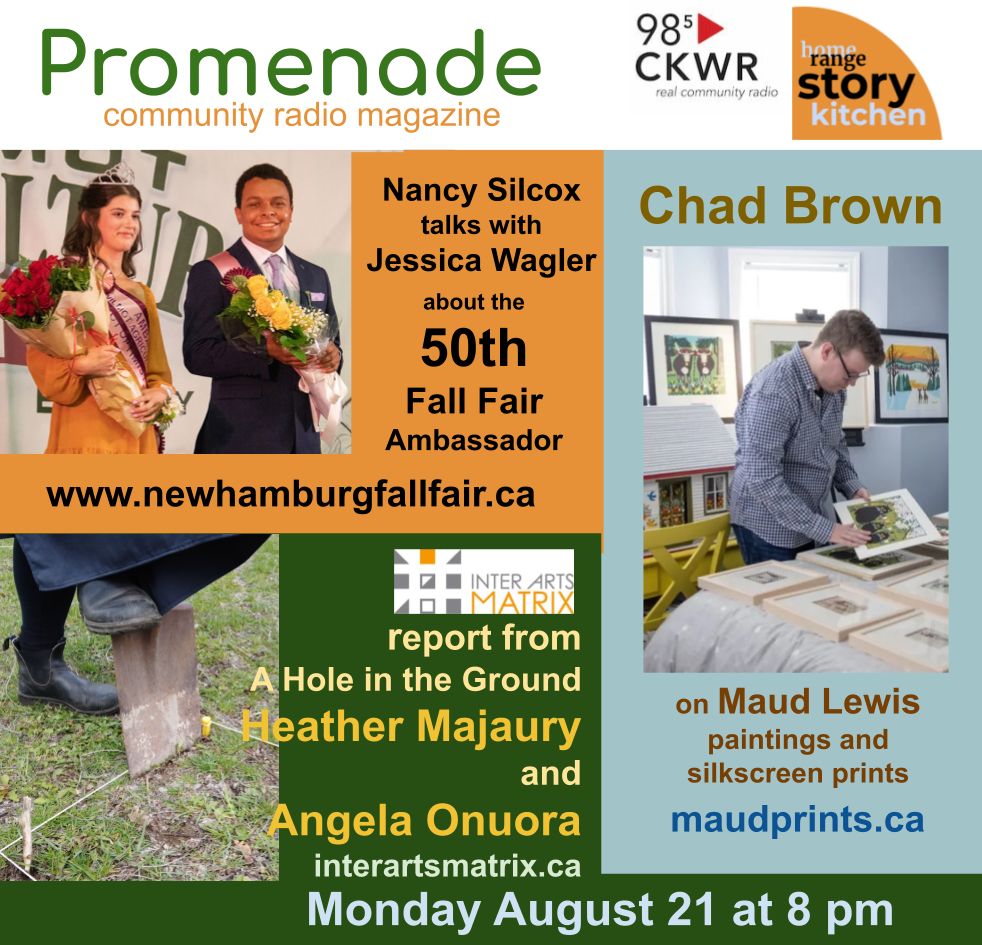
August 21 2023 Promenade

Our radio magazine for this week.

Mondays at 8 pm. Over the air via 98.5 CKWR | stream via ckwr.com | Rogers Cable 94.

Past issues: anchor.fm/homerange

Timestamp:

00:00 Intro; Jessica Wagler on the New Hamburg Fall Fair Ambassador legacy newhamburgfallfair.ca

16:19 Chad Brown on Maud Lewis paintings and prints maudprints.ca

36:37 A Hole in the Ground: Heather Majaury passes the torch to Angela Onuora interartsmatrix.ca

On Further Reflection – What’s in a name: Kitchener 2 of 2

Kitch

Originally written for CultKW, posted September 2, 2020

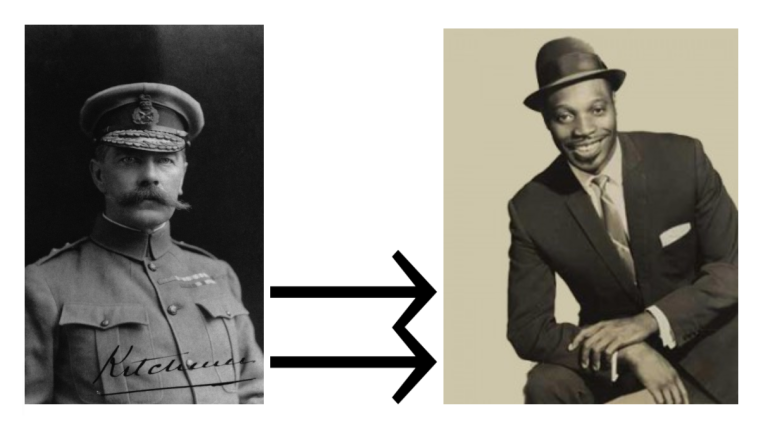
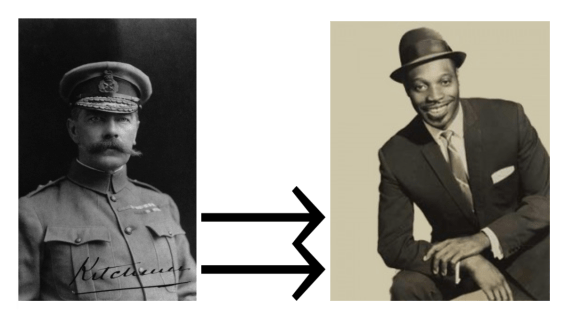
I’d like to make a motion: That the City of Kitchener be officially re-dedicated to the honour and memory of the other Lord Kitchener: Aldwyn Roberts, HBD DA, the great 20th-century Calypsonian.  

April 18, 2022 would be a good target date: The centennial of his birth.

So what connection does this city have with the grand master of calypso?

Well, we can start with the simple fact we share the Imperial Field Marshal as a namesake. The connection came to this city through the debacle of 1916. For the calypsonian, we’re told that he took “Kitchener” as his  stage name when he was a teenager, and his fans added the “Lord” later. The artist and the City shared this connection for roughly 60 years.

There is no need to disparage the City’s original namesake by any of this. The rationale can simply be, Lord Kitchener of Khartoum’`s memory has been honoured for 106 years, now let’s pay some attention to `the other Lord Kitchener for a while. There can even be a stipulation that the matter be re-examined in the year 2128, so future citizens can consider allowing the two heroes to take turns every 106 years or so.  
Designating a day to think about Lord Kitchener and his 100 + year association with the city would be an honourable parting gesture: June 6, perhaps, the day that he drowned, which was just over three weeks before the day of the referendum that selected his name for this City.

A new spirit of Lord Kitchener the calypsonian would prevail the rest of the year, adopted in part because it is much more compatible with the ethos of the original Berlin, Canada than anything associated with Kitchener.

The main connection is the historical one that we share with everyone in the land of the Canadas. The theme that makes the story of Canada as a modern nation state exceptional is the fact that we never made a complete break with what came before.

The True North we sing about in the anthem emerged out of that vast global domain that was once symbolically embodied in the personage of Victoria Regina. And we are still associated with what remains of it, both as a present actuality and as memory. The empire is part of our story, and our stories are part of the empire and its legacy.  

So in a very real way, the Canadas represent the fruition of England, France and even the Netherlands in North America, including all the treaties and other dealings with the Indigenous peoples of Turtle Island, and all the transgressions and other dealings with the peoples of Africa. 

Naming a city after a legendary artist from Trinidad and Tobago would acknowledge all that. But this would be just a starting point for a full consideration of what this symbolic act would mean. The rest will be what we decide to make of it.

We’d be starting with a gesture that will likely appear as a joke at first. That’s OK. That’s not unlike the calypsonian way: serving up what are often “serious, even subversive, messages”1 with rhythms, sounds and words that are joyfully amusing.  

And we can use some of that in the present hour. There’s not so much as a scintilla of fun in our current namesake, other than the fact that his stiff grandiosity almost begs for derision. It is difficult to imagine “the Avenger of Gordon, Lord Kitchener of Khartoum” could ever have earned an affectionate nickname like “Kitch”.

So we can keep the distinction clear by calling our new namesake “Kitch. Once the switch is made, the can also be applied to the City in ordinary usage: It can be become a Kitch, like a William becomes a Bill, and a Dorothy a Dolly or a Dot.

A lighter touch would suit the city. Part of the inheritance of the people who started coming from Germany in the 1820s is a more healthy attitude towards fun. This stems from the fact that they were Catholics and Lutherans, in contrast to the straight-laced white anglo saxon protestant provincial mainstream, which included most of the ruling elite.


One of the chapters in the souvenir booklet for Kitchener’s centennial in 1954 is “Always a Showtown.” The cover, on which the arts are given equal weight to industry, and the title: “City of Talent”, indicate this as well. 

When it was first introduced, Kitchener’s Oktoberfest was a significant step towards showing Ontarians that they could have a good time eating, drinking, dancing, singing and exclaiming. It is our link to carnival traditions all over the world.

Canada as a whole has strengths in this area: We’ve become known for our humour. This is a gift that didn’t evolve out of Toronto the Good, or Sunday Blue Law Ontario. 


Modern calypso emerged in conjunction with the capacity for recording and broadcasting music, and the evolution of the steelpan drum. It is rooted in African culture, and flavoured by the French presence during the 18th century and the proximity of Spanish colonial societies.

At the point when Kitch and the kind of music he created began becoming a global phenomenon, there were entire orchestras with instruments fashioned out of the 55-gallon oil drums made available in massive quantities through the U.S. military presence in the area.

Out of recycled material related to war, domination and environmental degradation, the people of Trinidad and Tobago created a magnificent musical instrument and a joyous musical genre.

This is an example one can pin some hope on: a sword into ploughshares, lion lying down with the lamb kind of development. And therefore much more in line with the pacifist origins of Waterloo County than the man in the recruiting posters.

As the horrors of the 20th century slip farther into the past, it becomes increasingly clear that the value of the gifts that Kitch and his people have given to the world far outweigh those of any military commander.

There is no need, however, to load the name switch with too much meaning. The possibilities are better left as a field of exploration and discovery.

The challenge will be maximizing the fun element, yet retaining the appropriate gravitas given that the Atlantic slave trade, the plantation system and modern colonialism are part of the background.

Although the land of the Canadas does have historical ties with the West Indies, it is important to remember that calypso, soca and steelpan music are a gift to the world from a Caribbean culture and society, and not ours to exploit.  

It is worth noting that there are approximately 10,000 citizens of Caribbean origin in the Kitchener census area today, and that this is more than there were people of German background or the British Isles back in 1916 (the total population at the time was about 15,000).

The Caribbean includes many nations, each with a diversity of its own.

The ideal would be to make the switch part of the spirit of Berlinnova, and an avenue to meaningful connections, not just with Canadians with Caribbean roots, but with all the peoples, nations and cultures of the most southern regions of the continent we share. 

Aldwyn Roberts is also the artist who sang “London is the Place for Me” for the newsreel cameras when he arrived on the famous HMT Empire Windrush to take England by a storm in 1948.

By making the switch, the City wouldn’t be overturning the imperial connections symbolized by Lord Kitchener the warrior. By embracing Lord Kitchener the artist, it would be embarking on a journey that promises to make those associations freshly meaningful.

Note: The Empire Windrush was originally a German ship called the MV Monte Rosa, built in the 1920s for trade with and emigration to South America

post script

Oktoberfest in May

Originally written and posted May 2021

The May Day signal went out in March: Kitchener-Waterloo Oktoberfest is facing a serious crisis.

There is talk of major changes in the works, aimed, as Oktoberfest Executive Director Alfred Lowrick has said, towards making it “a more family-friendly festival that celebrates the region’s Germanic roots while better reflecting the diversity that’s come to represent the area.”

That sounds reasonable. The best approach, when dealing with a time-honoured entity like this, is one that is progressive, but also conservative:

Protect and preserve, but also adapt. Renovate as needed; build anew where it makes sense to do so, but always build on what exists.

Taking steps to better reflect this region’s diversity is sound advice. The fact is, our diversity can be traced to those German roots: We are the only major Canadian settler city area whose founding tradition is neither anglophone nor francophone.

Thanks to those German language roots, we have reasonable claim to be the birthplace and capital of allophone Canada. And a 21st century Grand River Country Oktoberfest can play a leading role in making such a claim.

To that end, here are nine points of advice:

1 Keep the German language and culture foremost, but broaden it to encompass the German-speaking world in the 21st century, both in the homelands — Germany, Austria, Switzerland — and throughout the diaspora.

It could even be all Germanic languages, including what anglophones call “Dutch”, which is my native tongue. And if we go that far, we might as well go all the way and make it allophone Canada in all its diversity.

2 Keep the role of the German clubs central — Concordia, Schwaben, Transylvania, Alpine, Hubertus Haus. A smart move would be to invite involvement from other cultural associations, especially those that own and operate their own places and spaces. There are dozens of them. All of them face challenges. They’re better off working together.

3 Keep the beer, the sausages and the sauerkraut. It’s high time, though, to move beyond the domestic beer duopoly and towards artisanal and legacy brewing, especially independent production here in Grand River country, but also the beers of the whole wide world.

That goes for artistry and tradition in fermenting and preserving as well. If local Koreans came forward to share the kimchi tradition, it wouldn’t diminish celebrating sauerkraut in any way. The enjoyment of bratwurst and frankfurter würstchen is fully compatible with an appreciation of chorizo, boerwors, sujuk, makanek, longganisa, sai oua, or alheira.

4 In a similar vein, strengthen the polka component, but complement it with offerings from comparable popular dance traditions from around the globe: rumba, flamenco, dabke, square, line, swing, jig, shuffle, … .

Say it’s the Levant group, representing people from the Lebanon, Syria, Palestine, Jordan and Kurdistan area, that steps forward to bring Dabke dance into Oktoberfest. Some polka people might take it up, but they can also stick to pure polka if that’s what they prefer.

5 Keep the harvest theme, but deepen the meaning to include celebrating

  • the Waterloo County food tradition;
  • holding the line to protect the farmlands of Greater Waterloo, and
  • giving thanks for the beauty and bounty of our earthly home.

6 Keep the downtown Kitchener base, but aim towards a festival that manifests an ascendant spirit of “Berlinnova,” as the visionary Kitchener artist Edward Schleimer advocates. There has been a renaissance bursting to emerge for decades now. A 21st century Oktoberfest can help this city to truly flourish in ways it hasn’t been able to since the tragedies of the First Great War.

7 Hold fast to October – all of it, not just a nine-day slice. Extol the glory of autumn in Southern Ontario, and throughout Great Lakes North America as a whole.

8 Put the maypole up on May Day. October was once the eighth month. The time to begin preparation for a great harvest festival is when the original new year turns — i.e., months 1, 2 and 3. That means right about now, as our spring planting holidays unfold: the original new year at the vernal equinox, Easter, Earth Day, Arbour Week, May Day, Mothers Day, and Victoria Day.

9 Make land acknowledgment an integral part of every aspect of planning a revitalized Oktoberfest.

There are many ways of saying that Kitchener’s Oktoberfest takes place on the traditional home of the Neutral (Attawandoron, or Chonnonton), Anishinaabe, and Haudenosaunee peoples.

It is a matter of fact that Kitchener, Cambridge and Waterloo are all built on the Haldimand Tract, the lands granted to the Six Nations from Upstate New York, refugees from the War that led to the separation of the United States.

Our community could lead the nation in developing a meaningful and distinct allophone Canadian dedication to honouring the promises and agreements with Indigenous peoples on which British and French North America were founded.

On Further Reflection – What’s in a name: Kitchener 1 of 2

Kitchener

Originally written for CultKW, posted July 20, 2020


“He is not a great man, he is a great poster.” – Margot Asquith 

Let’s face it, Kitchener is a weak name. “Tacky” is the word that keeps coming to mind, but that’s not quite it. There’s just something awkward about it. This could be why you hear people say “Kitchener-Waterloo” so often, to mask the embarrassment.  


Ah, but why get all bothered up about it once again? There’s a point when it really doesn’t matter any more. They’re just three syllables. The KI’-chuh-nr sound has been used to designate this Canadian city for 104 years now.   

Time has taken us beyond living memory. There is no one left who can remember hearing the original two-syllable name spoken during the brief time it applied (the City of Berlin only lasted four years).

A joke I once heard from a stand-up comedian on a late night talk show comes to mind; I don’t remember his name or what show. At one point in his routine he says something like “I’m quitting the comedy game and going back to graduate school. I already know the title of my dissertation: ‘Lincoln: The Man and the Car’”.

When I mention that line, as I have many times over the years, it is remarkable how often people say that they never made the connection. 

A name change can be divisive. Since Kitchener, Ontario has been around for more than a century now, changing it would be an erasure to correct an erasure.

It can also be expensive: all those signs that have to be altered; all those business cards that have to be replaced; all those websites, road maps, brochures, lettering, ancillary branding … everything “K-W” would have to go too.… . But it could be worth it. Because the name is not a good fit for a great Canadian city, especially not this particular great Canadian City.  

What I’m interested in is what makes Berlin/Kitchener exceptional, starting with how it all began.

Have you ever heard of Zelinsky’s “Theory of First Effective Settlement”? Wilbur Zelinsky was a U.S. cultural geographer who postulated that, in a settler colonial situation, when a territory is newly settled, the cultural characteristics of the first group that is able to establish “a viable, self perpetuating society are of crucial significance for the later social and cultural geography of the area, no matter how tiny the initial band … .”

I like to imagine this is true, and enjoy looking for traces of the patterning process in operation.

We associate the County with the plain folk who made their way up here from Pennsylvania, while Berlin the town came into its own when German-speaking immigrants began arriving in the 1820s (nudge: another bicentennial coming up).

This is the only major Canadian settler city whose founding tradition is neither francophone nor anglophone. So we have a reasonable claim to be the birthplace and capital of allophone Canada. And I’ve argued that we should make that claim, with the region’s “deutschophone” population taking the lead. 

The years leading up to the name change in 1916 were a hateful time. The British Empire was at war, and Canadians were putting their lives on the line to save it. It was our patriotic duty to do so, because the Empire was part of what we were, and we were part of the Empire. It was cowardly, perhaps, but understandable that local manufacturers would want to disassociate with the once proud “Busy Berlin” brand.

A year later the British royal family yielded to pressure to take a similar path, and changed their name from Saxe-Coburg and Gotha to Windsor.

But at least that name has  some association with the family that adopted it: Windsor Castle was built by William the Conqueror, and has been used by the reigning monarch since his son Henry I ascended to the throne, which makes it the longest-occupied royal palace in the West.

Field Marshal Horatio Herbert Kitchener, 1st Earl Kitchener KG, KP, GCB, OM, GCSI, GCMG, GCIE, PC had no connection with Berlin, Ontario, Canada whatsoever.

What happened here in 1916 is one of the reasons why, if I was ever in a position of influence in Ottawa — a Senator, say — I would put forward a private member bill to ban decision-making through a simple majority referendum on any important matter in the Canadas forever and ever, at least any important matter pertaining to the whole.

The name change of 1916 is understandable, and although it was barely legal and far from fair, it was probably wise for citizens of Canada’s Berlin to accept their fate and get on with living, working, learning and associating.  

But what happened here during the Great War may have damaged the City in ways that have never been repaired. What sticks in my mind is something that Stuart Scadron-Wattles of Theatre & Company said at one of the public meetings about downtown revitalization long ago — I think it was for Mayor Richard Christie’s Task Force on the Downtown in 1995. 

“You people hate yourselves”, he said. He told us that he’d lived in many places before coming here from the U.S., and had never seen a community with such a low level of self-esteem, confidence and civic pride.

He went on to hypothesize that this may have something to do with what happened here in 1916.

A city can carry on, but it doesn’t simply buckle down and “get over” something like that. For the industrialists of busy Berlin, it was a brand makeover. But the final outcome of the Battle for Berlin, Ontario also lays a burden of shame and guilt on a segment of the citizenry for associations they acquired at birth.

It is, however, possible to imagine a radical break from a pattern of blame, shame and low self-esteem. 

Kitchener artist Edward Schleimer, the grand champion of name change supporters, feels that burden deeply. He calls himself the “Last Berliner”.

Aware of the limitations and complications of reverting to the original, Schleimer offers an alternative: “Berlinnova”.

It is a proposal, not just for a name that reconnects the city with its origins, but also for a new spirit, a new morale: a great flourishing of faith, of industry, and of culture in every sense, including arts&culture, folk cultures, Indigenous cultures, even horticulture and agriculture.

Schleimer’s writing includes complex layers of meaning, symbolism, riddles and word play, which can seem like deliberate obfuscation, but what he’s writing about are actually glimpses of a vision that cannot be readily encapsulated in an abstract or an executive summary.

Would the Last Berliner be satisfied with “Berlinnova” as the name of a movement, an ethos, a renaissance, without an official name change? I don’t know.

There could be other symbolic gestures towards reconciliation short of a full name change. For instance, I’d be all in favour of doing a switch, and re-renaming the city’s main civic space “Berlin Square”, as originally intended, and reciprocally honouring our long serving recent mayor with a “Carl Zehr Tower” at City Hall.

I’d be in favour of naming the area within what the new city’s limits were in 1912 “Berlin Town”, as an alternative for “downtown” or the “core”.

“Berlinnova” could be a place as well as an ethos. It could designate everything up to the Conestoga Parkway, Westmount Road and the Waterloo line, or all parts of the city that were contiguously built, from the Royal Crossroads outwards, up to 1950 or so.

There could be a Berlin, Canada Day to commemorate the 83 years a village, town and city by that name flourished in Upper Canada/Ontario. August 30, perhaps, which was the last day before the name change came into effect in 2016. Or, since the aim is to spark a renaissance, August 28, Goethe’s birthday.

Since it was Europeans fighting one another that caused all this trouble, it would be fitting if Berlin, Canada Day would be a celebration of peace, especially the peace that has prevailed in the Old World since May, 1945.

Europeans today like to emphasize that this is now the longest period without war since Pax Romana, the relative peace that began with the reign of the man we still honour with a whole month every year, Imperator Caesar Divi filius Augustus. It lasted about 200 years.

But Berlin/Kitchener is not Europe. The 205 years of peace between the original Canada and the prodigal republic to the south is also something worth celebrating. And we can go beyond that: the spirit of Berlinnova can aspire to future peace, not historic peace alone, and work towards peace on earth, not just here and there.

For Kitchener at large, I have another idea.