This is a shorter version of an Evening Muse post from December, 2024. It’s about the vitalization of my city’s original civic, cultural and commercial centre, which is something I’ve been interested in since the October, 1993. This was part of a series about “turning the idea of a ‘capital of culture’ on its head, and showing the world who and what we are by working together as the five cities and seven nations of Grand River Country to organize a ‘Culture as Capital ManiFest and Homecoming’ event for, say, 2026 or 2027.”
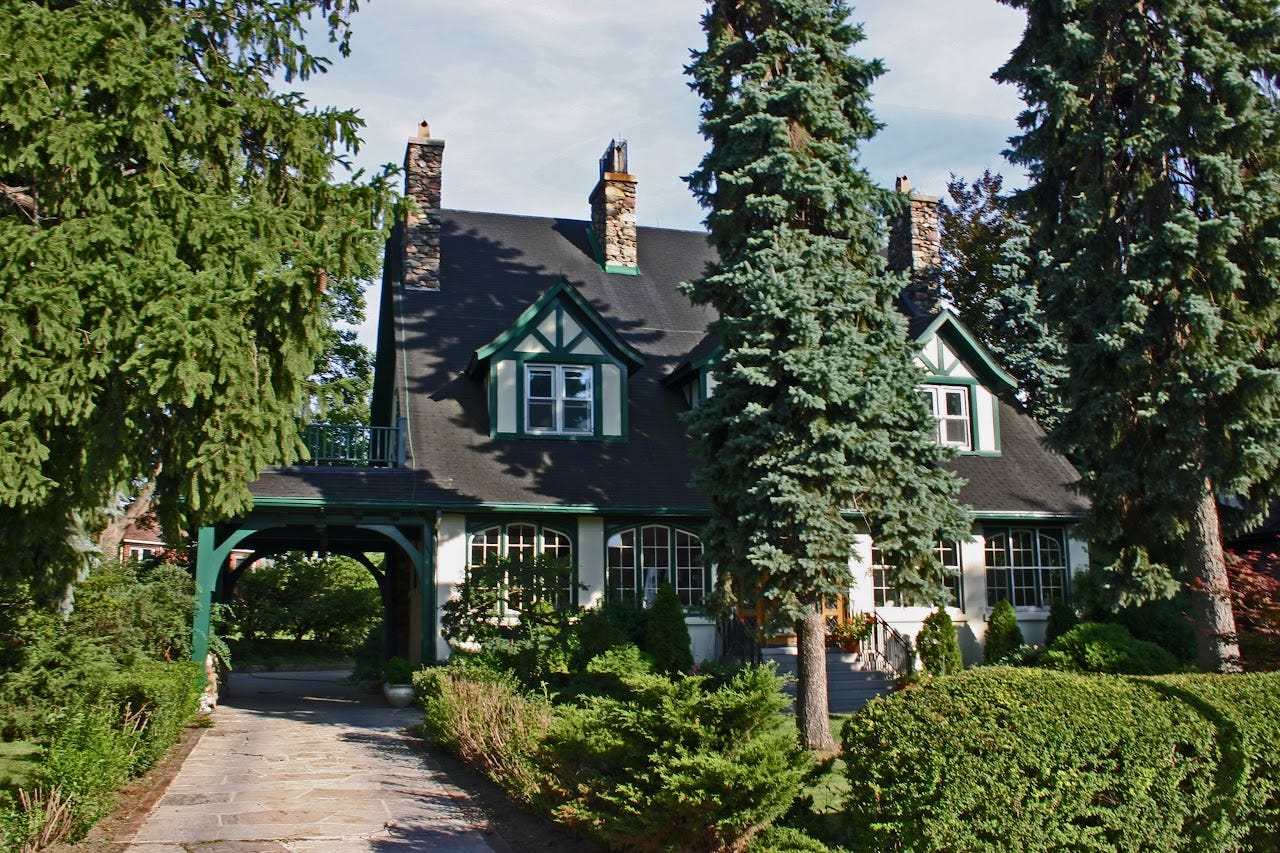
Bread & Roses Co-operative Homes 307 Queen St S, built 1879
For anything like a Culture as Capital initiative to become a reality, all sorts of ingredients will have to be assembled, while a complex range of factors, wills and energies are mustered, harmonized and set into motion. This will take time. But we don’t have to wait until everything is in place to start actually doing things. The best time to begin is now. The best place is right where you are. And the best way to proceed is step by step, starting with what is immediately achievable.
As a step towards a year-long, watershed-wide “Culture as Capital” manifestation, I propose an experimental “Summer of Learning & Discovery” in an actual place: Queen Street North and South, in the heart of Kitchener.
Because coherence in the watershed and adjacent areas is so weak, the first step towards “Culture as Capital” manifested in real places is best centred around a geography that is more readily reachable in terms of communication, visibility and mobility. The terrain has to be fathomable, and it has to be walkable. There must be assets in place that can serve as a foundation to build on. And there needs to be space to move freely about, with ample room to build and grow. Kitchener’s Queen Street axis meets all these requirements.
An axis is “a main line of direction, motion, growth or extension.” Queen Street as a cultural focal point extends from the Green Gables Guest House, home of Music at Green Gables, down to where what I like to call the Preston-Berlin Rail Trail (officially known as the “Iron Horse”) crosses the roadway, and all that’s within easy reach on foot from any direction, at any point along the way.
Green Gables Guest House, at the top of Queen at Lancaster
There’s a lot to work with in this district, including:
Green Gables Guest House / Music, KW Art Gallery, Raffi Armenian Concert Hall, CITS Studio Theatre, Timothy Schmalz’s Fallen Firefighters Memorial, Church of the Good Shepherd (Swedenborgian), Kitchener Public Library Central, Greater KW Chamber of Commerce, Holly’s Cafe & Gallery at 27 Roy, Apollo Cinema, St Andrews Presbyterian, St Peters Lutheran, RoW Headquarters, Registry Theatre, Suddaby School, Governors House & Gaol, including under-utilized porch, courtyard and garden, Regional Archives, Heimie Place, Hibner Green, Vogelsang Green, Goudies Lane, Siegner Lane, Clemens Lane, Conestoga College DTK, Speakers Corner, SDG Idea Factory, THEMUSEUM, Conrad Centre, Green Light Arts, The Walper and Crowne Plaza hotels, three under-utilized 20th-century style parking garages, a half-empty 20th-century style shopping mall, The Working Centre, Historic St Paul’s Lutheran, St Matthews Lutheran, including the new St Matthews Centre, Benton St Baptist, Schneider Haus, Victoria Park, including Lake, Boathouse, Pavilion, Museum, and Bandstand, Queen’s Green Community Garden, REEP House … .
With a radial approach, there is no need to set limits on what can be included, but walkability is paramount. Assets and energies within easy walking distance include:
Kitchener Market, Willow River Centre, Rose Cafe, Fresh Ground, Yeti, Serrinia … , Crushed Almond, Aura-La … , Globe Studios, including CAFK+A, Inter Arts Matrix, Studio 38, Corner Studio, Courtland School, Cameron Heights, Dallas, Wax and Elements nightclubs, St Mary’s Roman Catholic, Downtown Community Centre, St John the Evangelist Anglican, Civic Hub, First Church of Christ, Scientist, Matter of Taste, Pyrus, Lucero, Smile Tiger, First Church of Christ, Scientist, Laurier Faculty of Social Work, UWaterloo School of Pharmacy, The Tannery, City Hall, a second 20th-century style shopping mall, almost completely empty, 44 Gaukel Creative Workshop, Treehaus Collaborative Workshop, Gaukel Block, Charles Street Terminal, Clock Tower Commons …
and, of course, that marvelous constellation of neighbourhoods that surround downtown Kitchener, including the growing number of “vertical villages” in and near the city’s traditional civic, commercial and cultural centre.
The idea is to develop a program of offerings that have an exploratory or educational component, building on what has already been accomplished and making full use of resources that are currently available within range of this Queen Street axis. It should be activities that require some effort, but that are also for enjoyment more than any kind of practical purpose or benefit. The objective is deepening knowledge and appreciation of our shared cultural inheritance in all its manifestations as an end in itself, for the enjoyment of it.
Some examples of existing programs with an exploratory element that come immediately to mind are:
More than any of the other examples cited above or below, it was Daniel Lichti’s Art of Lied Music Festival and Mastercourse project at St Andrews Presbyterian and other Queen Street North and South locations last July that inspired my thinking in this direction, beginning almost a year ago now, when I first heard about his plans and interviewed him about them for the “community radio magazine” I send out into the world every week.
Other examples that drew my attention for their “learning and discovery” aspects as the summer unfolded include:
Open Ears 2024, a downtown highlight since 1998, which ran May 30 – June 2, and included presentations from
The Creek Collective, a kind of festival within a festival. This was followed by
I was out of town when Mama’s Cookout & Music Festival happened on July 13, but this project of Rufus John’s Freedom Marching initiative applying “the creative power of Art, Education & Activism” also deserves a place on this list.
Capping off an extraordinarily bountiful summer were two more presentations that struck me as full of promise:
Caribana Ignite! along King and from City Hall down Gaukel August 23 -25, the original Caribana Arts Group’s “celebration of the legacy, culture, and spirit of the Caribbean diaspora” as manifested, for the first time, in Downtown Kitchener, and
To my mind, each of these happenings raised the bar in some way. As we approach the end of 2024 and the beginning of another planetary journey around the sun, let’s take stock of these kinds of accomplishments, and ask: What else belongs on this list? Could these precedents serve as a foundation for future developments?
Now is the time to start thinking about what could be added to these offerings and others like them to create a critical mass that can be presented as an experimental program throughout the May to October planting-to-harvest growing season, if possible, starting in 2025.
How about a “Summer of Learning and Discovery,” with emphasis on exploration and appreciation? Building our appreciation for music, dance, beauty, history, our city, our watershed, our country and for all the cultures that are part of the fabric of our communities.
Meanwhile, doing an inventory of all the resources for learning and discovery available in the area, , including space for gathering, teaching, presenting, screening, discussion and working, would be very useful for the next phase of utilizing, enhancing and building on what exists.
As originally submitted and posted for CultKW on July 7, 2021.
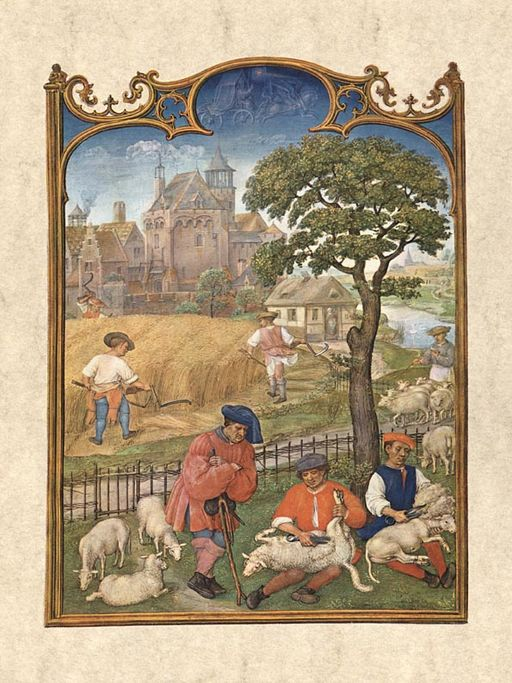
July, Brevarium Grimani, (Flemish, circa 1510) wikipedia
Here in Laurentian Ontario, the May “Two-Four” weekend is firmly established as a seasonal turning point, with emphasis on gardening, agriculture and outdoor recreation. I’d like to propose imagining the July First to Fourth stretch as a counterpoint, with emphasis on the various states, nations and federations on both sides of the long, traditionally peaceful border Canada shares with the U.S. of A.
Outrage
I spent a lot of my July First to Fourth this year online, furiously posting. It began with a response to a friend’s denunciation of what he saw as “deliberately timed vandalism in Victoria Park:” the pouring of blood-red paint over the statue of the park’s namesake monarch on Canada Day.
“I’m with you,” I wrote. “This is utterly deplorable. And, as we can see from some of the comments on your post, this isn’t going to stop.”
The incident happened a couple of blocks away from where I live, work and muse nowadays. I found some of the comments, on my friend’s wall and in other posts, terrifying. There are a disturbing number of voices who sound like they are ready to pull down all statuary, burn down churches, raze cemeteries, and hang the Pope for good measure.
This particular monument was erected in 1911, 10 years after the death of the Empress, in what was then still the Town of Berlin, Ontario. I’m not sure why I’ve grown so fond of it over the years. It is certainly not out of respect for the original purpose. On the contrary; what I find moving is how little remains of what I imagine those loyal, dutiful Daughters of the Empire had in mind when they decided to commission this work, and install it for posterity — i.e., for us.
I’ve suggested, in these musings, an adaptive re-use of the meaning of this and other remnants of empire and monarchy: They could have a fresh relevance, in Canada at least, as symbols of progress through peaceful transition. To me, they represent evolutionary adaptation, building on, with and through what exists. I prefer to treat them as symbols of what I hope is a rising spirit of “never demolish,” as opposed to the ceaseless disruption, erasure and destruction that has characterized British and U.S. Columbian culture and society since the days when Victoria ruled.
But, like words and storylines in general, such vestiges can mean whatever we choose. If people want to use these relics as a touchstone for a latter day “live free or die” revolutionary republicanism, that’s their prerogative.
Over and above whatever political meaning it may carry, the monument that was vandalized on Canada Day also has a more neutral aesthetic and cultural heritage value. It is an imposing presence, skillfully rendered in handsome bronze. The work has held up miraculously well over the years. But this artifact was not made to withstand willful destruction. It needs protection:
“It might be better,” I went on in my post, “if Cavaliere Raffaele Zaccaquini’s landmark sculpture of Victoria and the Lion were removed for safekeeping until the current beeldenstorm blows itself out. It is terrifying to see that it is even starting to take on some of the anti-Catholic zeal that drove my ancestors into such a frenzy during the original iconoclastic fury. After what happened last week [long story], I don’t trust the City of Kitchener with safeguarding heritage. Maybe this vulnerable, 110 year old public art work can be stored in the old armoury building in Galt, or the nearest pre-Confederation fort built to protect us from this kind of Boston Tea Party / Rebel Yell / Storming the Capitol red republican style of hooliganism.”
Inlaws and Outlaws
The assault on Victoria’s person cast in bronze was still on my mind three days later, when a friend and colleague sent me an early morning Independence Day greeting: “Happy July 4 if We were American.”
My first thought was:
“But we are American. We just didn’t take the separatist route. The proper way for a True North North American to observe July Fourth is to think lovingly of our long lost sibling, and promise not to be overcome with jealousy when the prodigal returns home”.
An hour or so later, I followed up with some additional thoughts:
“Ah, but it’s not so simple. We grew up and also left home eventually. The difference is that we have kept a loving, respectful relationship with the elders, despite how mean and cruel they have been known to be. We even keep celebrating great-great-great-great grandmother’s birthday, and smile in front of her tombstone in the park, regardless of how haughty, grumpy and humourless she could be, and how she never once came to visit us.”
The third installment gets darker:
“But that’s not really how it happened either, is it? Brother Sam and his Abrahamic brood returned home long ago. Or did we move in with them? I don’t remember exactly. Either way, where we live is actually nothing like a cosy family home. It is more like a vast ranch. A plantation, you might say. With mines and oil wells scattered among the cotton, tobacco and indigo fields. Together, we’ve built a family business empire with a global reach. The sun never sets on our domains. The meanness, the cruelty aren’t just a quirk among the old and frail. It’s a family trait. We share a special talent, a gift, for theft, fraud, murder, subjugation, plunder and rapine.
Two or Three Trains Running
I’d written a gentler version of the same story the day before, inadvertently on another friend’s timeline, something you should only do when you’re sure the imposition is welcome. In this case, I’m not sure.
This version of the tale began as a response to a Canada Day reflection on the “colonial train” we’ve all been riding on since 1867. My friend’s words were thoughtful, compassionate, hopeful: It was about how we are moving forward to something better. .
“Love the train metaphor,” I answered. “I agree, there is no going back. Living is forward motion. My version of the story (which I’d recently summarized on my personal website) varies slightly. It might not be a truer picture, but it helps me keep my hopes up. In my telling, it goes something like this:
In Canada, it is actually the independence train that has been running for 154 years. Similarly, in the U.S. it’s the Settler Home Rule Express that has been in operation for 245 years now. Both trains are sleek, modern, efficient. Both have, until recently, been steadily accelerating.
These national railways carry almost all the wealth, power, glory and influence that exist in their respective territories. And they’re intricately segregated according to class, occupation, age, education, race, ethnicity, language, accent, religion, tastes, preferences, proclivities, etc., etc. There are passenger cars, sleeper cars, dining cars, freight cars, coal cars, tanker cars, and even “concentration” cars full of people who have been forced to come along for the ride.
Both trains were built to run over everything that lies in their paths. They’ve become a danger to the very ground we live on. Mercifully, these parallel state railway operations appear to be slowing down. The view out the window isn’t as blurry as it was a while ago.
We, the living, are the paying passengers. And we are actually in charge. We just don’t seem to realize it yet. We appear to be unaware that if we want to stop this juggernaut, and change its purpose and direction, all we have to do is pull the emergency cord and reset the controls.
We don’t have to blow anything up, hunt down the owners and the management, or hang the conductor, the brakeperson and the engineer. We just have to make some adjustments.
But there are certain interests and mindsets who feel threatened by passenger rights, freedoms and powers, especially the freedom to associate. And they’re doing everything they can to keep us distracted, confused and anxious. Above all, they want to keep us divided.
In my story, there is also a colonial/imperial train that has been chugging along for 529 years. It is ludicrously old-fashioned, rickety and slow. It still carries negligible quantities of wealth and glory, but no real power or influence. The freight it carries is mostly antiques, souvenirs, mementos, curios, bundles of paper, fading photographs, rusty statues and other such bric a brac.
There are a few living humans on board, oddly attired with crowns, jewels, sceptres, swords, sashes, garters and such. For the most part, however, this is a train filled with ghosts, skeletons and crematorium ashes. No one is in charge. We have no power or influence there. But that’s not a problem: This train will come to a halt on its own accord. I suggest we let it rest in peace.”
Epilogue
There, I’ve had my say for another July First to Fourth season of nationalist and federalist celebration and contemplation.
I don’t really expect to win anyone over to my peculiar way of telling the story, nor do I care very much if people choose to carry on with what looks to me like battling ghosts and skeletons.
But I do want to make it clear that, by looking for alternatives to words like “colonialism” and “decolonization” when discussing the challenges before us, and by smiling a little when I look up, way up, to that bronze memorial to the Empress Victoria around the corner, I’m not signalling that I’ve gone over to the dark side.
There are no sides. Fear, hate and resentment are not forces to be reckoned with, tit for tat. They are an emptiness that begs to be filled, a void that is ready for light.
Ringo Starr, who turns 81 today, has the right idea: Peace and love, that’s about all there is to it. Here’s a personage whose radiant influence over the years may well have exceeded that of the Empress Victoria at the apex of her glory. The former Beatle doesn’t live in England anymore, so his “peace and love” birthday wish is actually California dreaming. Well, God save Ringo. Long may he shine.
The Tusculum portrait, a marble sculpture of Julius Caesar. wikipedia
P.S.: An anti-imperial, decolonizing afterthought
With all this purging, purifying, renaming and graven image smashing going on, why do we remain so content with carrying on with the ancient practice of naming two full months, ⅙ of the days of our lives, after two of the most notorious dictators, conquerers, colonizers, prison builders, slave hunters, culture destroyers and heaven stormers of all time?
Two thousand years Two thousand years Two thousand years Of your Goddamn Glory*
If anyone wants to pour red paint over the memory and legacies of Julius Caesar and Caesar Augustus, I wouldn’t utter a peep.
If someone were inspired to lead a march to restore a pacific, decolonized Quintilis and Mensis Sextilis to the contemporary summer calendar, I may join the procession.
This is a revised version of a contribution to THEMUSEUM’s now defunct CultKW project originally submitted May 21, 2021, presented here for the record.
The streets of Kitchener built up to 1953, when the characteristic squiggly suburban road pattern started to become dominant. Image is a screenshot showing layers covered by the interactive Kitchener Historical Street Project, created by the University of Waterloo Geospatial Centre.
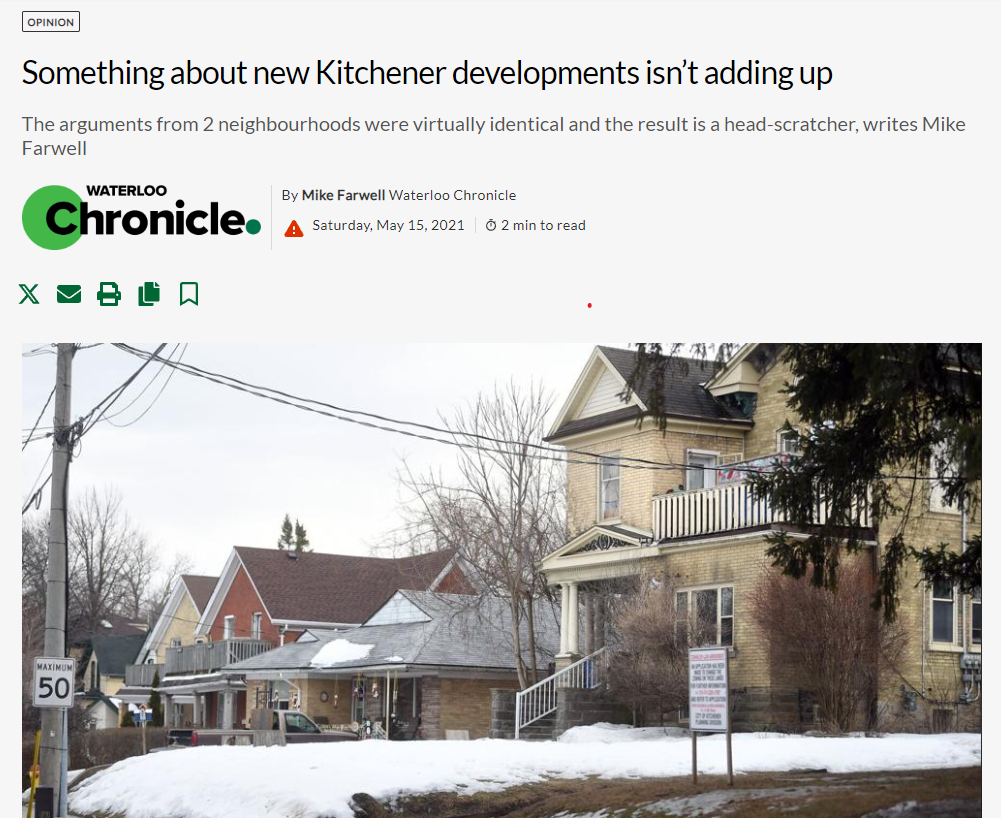
It was a Waterloo Chronicle article that reached me via therecord.com that set off my musings for this week: an opinion piece by local Barnbuilder and media personality Mike Farwell that raises questions about some recent planning decisions.
What caught my attention, first of all, was finding this essay about two controversial Kitchener highrise projects in Waterloo’s weekly. Is it the KW Chronicle now? If so, people in Waterloo should complain. What’s happened to the Kitchener Post? K-townsfolk should be concerned.
This touches on my opinion, which I’ve expressed repeatedly in these missives, that KW-centricity doesn’t serve any of the region’s eight polities very well, and that it is the people of Kitchener who have been short-changed the most.
I also have an opinion on the issue that Mike Farwell raises. He’s right, the story as he tells it doesn’t add up: If, as he contends, the “arguments from both neighbourhoods were virtually identical”, the decision to allow the highrise at Frederick and Avon to go ahead while scaling back the development at Queen and Mill is indeed “a head-scratcher”.
Farwell tells the story the same way The Record editorial on the Blair situation does: The three situations are all treated as NIMBY stories, neighbours rising up against a proposed change to say “Not In My Backyard”. But in the case of the village of Blair and the development at Queen and Mill, it is more than just the neighbours who have come forward to express concern.
Blair, as I suggested two weeks ago, is arguably the most significant heritage precinct in all of Waterloo Country. Mill Street is one of Kitchener’s original roads, adapted, they say, from an Indigenous trail pre-dating colonial settlement. In both instances, voices from all over the region concerned about heritage conservation and appreciation have been speaking up.
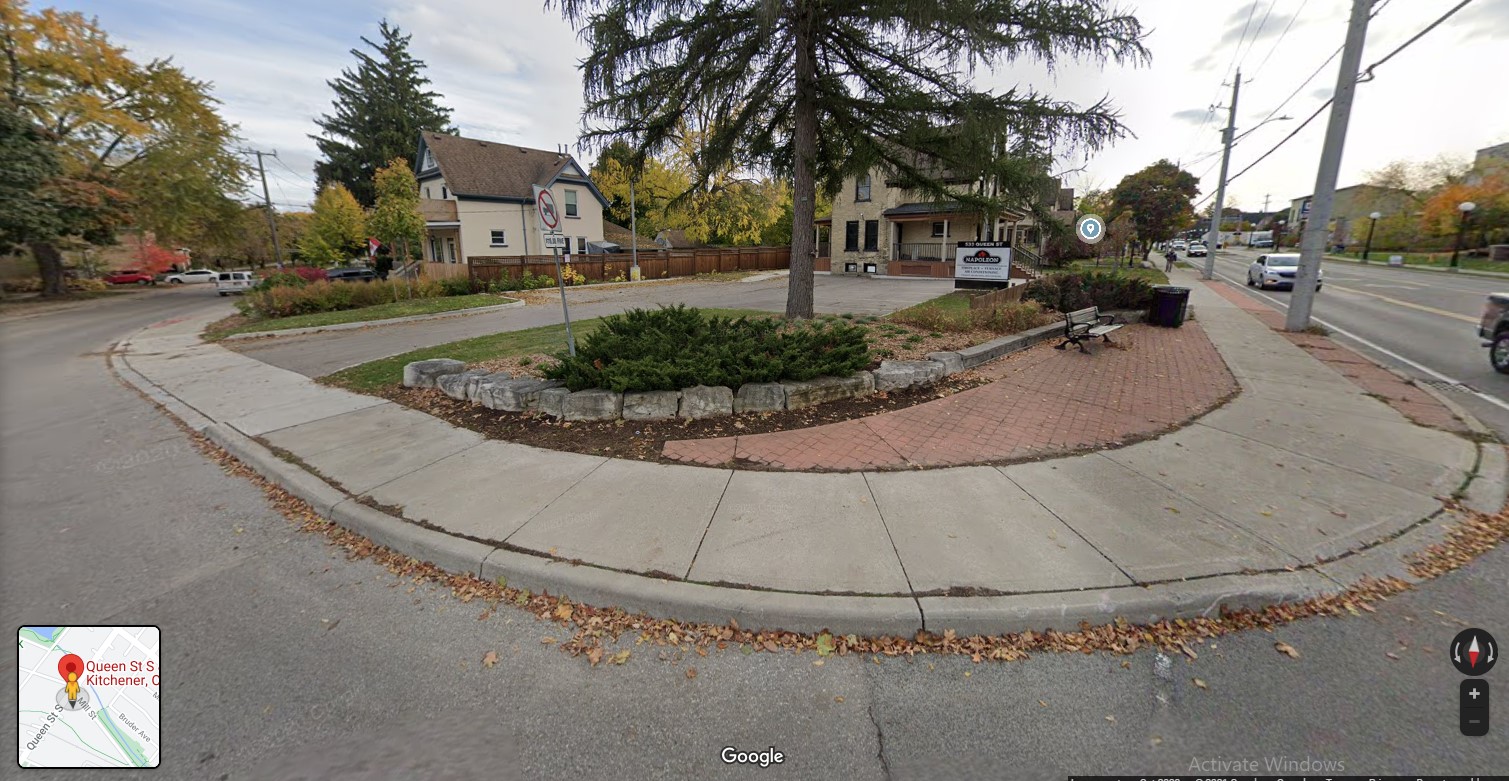
Mill and Queen looking south — Google street view screenshot I’m certainly concerned about heritage conservation, but haven’t said anything in public about the Mill Street situation. This is partly because the respectful side seemed well-represented. I’m also familiar with the developer. I can see the Polycorp offices from the south windows of my coop at the co-op, situated in a magnificent “Original Kitchener” heritage structure. I hoped, and trusted, that they cared enough to at least listen to our concerns.
But the main reason I kept mum is because I’m a firmly convinced and deeply committed “conservatory progressive”.
As a progressive, I know time doesn’t stand still. There is no going back to some imagined golden past. It is today that matters, in relation to tomorrow: The future will be the world we choose to make it, or what we allow to happen.
If this forward-looking attitude sounds reasonable, my “conservatory” bent may not: I’m not just calling for the protection of a few exceptional architectural gems from the ravages of heedless profit-seeking, neglect and time. I’m anchoring my hopes for the future on an imminent emergence of a profound respect for all heritage, cultural as well as natural.
The corner of Mill and Queen lies within what I like to call “Original Berlin/Kitchener”. Every village, town and city founded 100 or more years ago has a foundational core: Basically, this means all precincts that predate the rise of standard suburban growth patterns centred around the automobile.
Just as we now have a “Countryside Line” to protect the waters, the farmlands and the forests of Waterloo, I’m advocating for an “Original Town Line”, with distinct planning practices for contiguous areas built before 1950 or so, as well as special consideration of everything that has been built since then.
It’s not that one is better than the other; it’s that they’re different. The suburbs are designed for getting around in cars; the older building patterns are suited for people walking, cycling and for slower, mostly horse-drawn traffic.
And whether it’s within the Original Town Line or beyond, my preference is for the kind of “socially conscious and sustainable” building design that is practiced by Anne Lacaton and Jean-Philippe Vassal, whose work has been honoured with the 2021 Pritzker Architecture Prize.
When I heard about “their reverence for pre-existing structures, conceiving projects by first taking inventory of what already exists”, and their resolve to avoid any and all demolition, the thought that immediately came to mind was: “This is the future.”
Such views, however, are only just beginning to emerge. My sense is that entering the fray over the future of Blair or the junction of Queen and Mill with a battle cry like “never demolish” would likely do more harm than good to the cause.
So instead of taking a side, I’m returning to the point I tried to make two weeks ago: This isn’t a battle. The objective is the best possible outcome for the village or neighbourhood, for Cambridge and for Kitchener; for the people of the region today, and for people who will live, work, play and learn here throughout the rest of the century and beyond. These are not matters for debate, but for patient, comprehensive and considerate deliberation.
Civic deliberation, which in this context means democratic deliberation within a municipality and/or a watershed, is best served by avoiding any kind of two-way standoff, and starting by broadening the view of what needs to be taken into account, thereby complicating the picture.
To be effective, inclusive and meaningful, civic deliberation needs to move “beyond opinion”. Mike Farwell’s essay got me thinking, and I appreciate that. Rather than challenge his view that Mill and Queen is a better location than Frederick and Avon for density, the intention here is to complicate the picture, not only by drawing attention to the heritage factor, but also by raising the the fundamental question that Rick Haldenby of Waterloo Architecture is going to address in his upcoming for Kitchener Public Library: “What Kind of City Are We Building?”




 Martin de Groot