A July First to Fourth Notebook

As originally submitted and posted for CultKW on July 7, 2021.
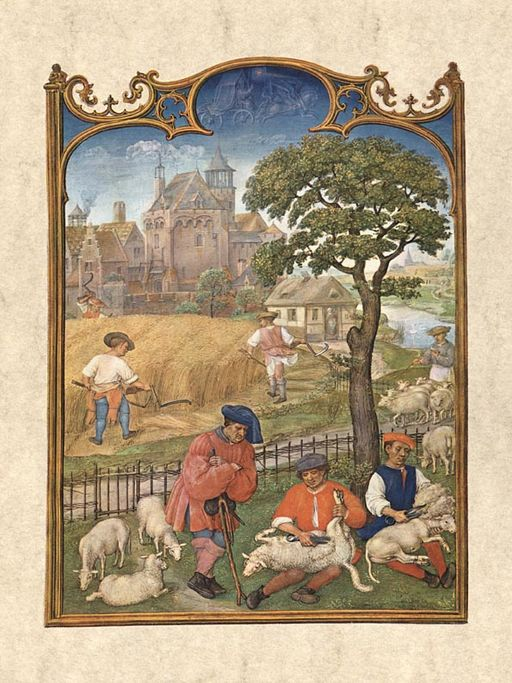
July, Brevarium Grimani, (Flemish, circa 1510) wikipedia

Here in Laurentian Ontario, the May “Two-Four” weekend is firmly established as a seasonal turning point, with emphasis on gardening, agriculture and outdoor recreation. I’d like to propose imagining the July First to Fourth stretch as a counterpoint, with emphasis on the various states, nations and federations on both sides of the long, traditionally peaceful border Canada shares with the U.S. of A. 

Outrage

I spent a lot of my July First to Fourth this year online, furiously posting. It began with a response to a friend’s denunciation of what he saw as “deliberately timed vandalism in Victoria Park:” the pouring of blood-red paint over the statue of the park’s namesake monarch on Canada Day. 

“I’m with you,” I wrote. “This is utterly deplorable. And, as we can see from some of the comments on your post, this isn’t going to stop.”

The incident happened a couple of blocks away from where I live, work and muse nowadays. I found some of the comments, on my friend’s wall and in other posts, terrifying. There are a disturbing number of voices who sound like they are ready to pull down all statuary, burn down churches, raze cemeteries, and hang the Pope for good measure. 

This particular monument was erected in 1911, 10 years after the death of the Empress, in what was then still the Town of Berlin, Ontario. I’m not sure why I’ve grown so fond of it over the years. It is certainly not out of respect for the original purpose. On the contrary; what I find moving is how little remains of what I imagine those loyal, dutiful Daughters of the Empire had in mind when they decided to commission this work, and install it for posterity — i.e., for us. 

I’ve suggested, in these musings, an adaptive re-use of the meaning of this and other remnants of empire and monarchy: They could have a fresh relevance, in Canada at least, as symbols of progress through peaceful transition. To me, they represent evolutionary adaptation, building on, with and through what exists. I prefer to treat them as symbols of what I hope is a rising spirit of “never demolish,” as opposed to the ceaseless disruption, erasure and destruction that has characterized British and U.S. Columbian culture and society since the days when Victoria ruled.    

But, like words and storylines in general, such vestiges can mean whatever we choose. If people want to use these relics as a touchstone for a latter day “live free or die” revolutionary republicanism, that’s their prerogative. 

Over and above whatever political meaning it may carry, the monument that was vandalized on Canada Day also has a more neutral aesthetic and cultural heritage value. It is an imposing presence, skillfully rendered in handsome bronze. The work has held up miraculously well over the years. But this artifact was not made to withstand willful destruction. It needs protection:

“It might be better,” I went on in my post, “if Cavaliere Raffaele Zaccaquini’s landmark sculpture of Victoria and the Lion were removed for safekeeping until the current beeldenstorm blows itself out. It is terrifying to see that it is even starting to take on some of the anti-Catholic zeal that drove my ancestors into such a frenzy during the original iconoclastic fury. After what happened last week [long story], I don’t trust the City of Kitchener with safeguarding heritage. Maybe this vulnerable, 110 year old public art work can be stored in the old armoury building in Galt, or the nearest pre-Confederation fort built to protect us from this kind of Boston Tea Party / Rebel Yell / Storming the Capitol red republican style of hooliganism.”

Inlaws and Outlaws

The assault on Victoria’s person cast in bronze was still on my mind three days later, when a friend and colleague sent me an early morning Independence Day greeting: “Happy July 4 if We were American.”

My first thought was: 

“But we are American. We just didn’t take the separatist route. The proper way for a True North North American to observe July Fourth is to think lovingly of our long lost sibling, and promise not to be overcome with jealousy when the prodigal returns home”.

An hour or so later, I followed up with some additional thoughts:

“Ah, but it’s not so simple. We grew up and also left home eventually. The difference is that we have kept a loving, respectful relationship with the elders, despite how mean and cruel they have been known to be. We even keep celebrating great-great-great-great grandmother’s birthday, and smile in front of her tombstone in the park, regardless of how haughty, grumpy and humourless she could be, and how she never once came to visit us.”

The third installment gets darker:   

“But that’s not really how it happened either, is it? Brother Sam and his Abrahamic brood returned home long ago. Or did we move in with them? I don’t remember exactly. Either way, where we live is actually nothing like a cosy family home. It is more like a vast ranch. A plantation, you might say. With mines and oil wells scattered among the cotton, tobacco and indigo fields. Together, we’ve built a family business empire with a global reach. The sun never sets on our domains. The meanness, the cruelty aren’t just a quirk among the old and frail. It’s a family trait. We share a special talent, a gift, for theft, fraud, murder, subjugation, plunder and rapine.

Two or Three Trains Running

I’d written a gentler version of the same story the day before, inadvertently on another friend’s timeline, something you should only do when you’re sure the imposition is welcome. In this case, I’m not sure. 

This version of the tale began as a response to a Canada Day reflection on the “colonial train” we’ve all been riding on since 1867. My friend’s words were thoughtful, compassionate, hopeful: It was about how we are moving forward to something better. . 

“Love the train metaphor,” I answered. “I agree, there is no going back. Living is forward motion. My version of the story (which I’d recently summarized on my personal website) varies slightly. It might not be a truer picture, but it helps me keep my hopes up. In my telling, it goes something like this:

In Canada, it is actually the independence train that has been running for 154 years. Similarly, in the U.S. it’s the Settler Home Rule Express that has been in operation for 245 years now. Both trains are sleek, modern, efficient. Both have, until recently, been steadily accelerating.

These national railways carry almost all the wealth, power, glory and influence that exist in their respective territories. And they’re intricately segregated according to class, occupation, age, education, race, ethnicity, language, accent, religion, tastes, preferences, proclivities, etc., etc. There are passenger cars, sleeper cars, dining cars, freight cars, coal cars, tanker cars, and even “concentration” cars full of people who have been forced to come along for the ride. 

Both trains were built to run over everything that lies in their paths. They’ve become a danger to the very ground we live on. Mercifully, these parallel state railway operations appear to be slowing down. The view out the window isn’t as blurry as it was a while ago. 

We, the living, are the paying passengers. And we are actually in charge. We just don’t seem to realize it yet. We appear to be unaware that if we want to stop this juggernaut, and change its purpose and direction, all we have to do is pull the emergency cord and reset the controls.

We don’t have to blow anything up, hunt down the owners and the management, or hang the conductor, the brakeperson and the engineer. We just have to make some adjustments.

But there are certain interests and mindsets who feel threatened by passenger rights, freedoms and powers, especially the freedom to associate. And they’re doing everything they can to keep us distracted, confused and anxious. Above all, they want to keep us divided.

In my story, there is also a colonial/imperial train that has been chugging along for 529 years. It is ludicrously old-fashioned, rickety and slow. It still carries negligible quantities of wealth and glory, but no real power or influence. The freight it carries is mostly antiques, souvenirs, mementos, curios, bundles of paper, fading photographs, rusty statues and other such bric a brac. 

There are a few living humans on board, oddly attired with crowns, jewels, sceptres, swords, sashes, garters and such. For the most part, however, this is a train filled with ghosts, skeletons and crematorium ashes. No one is in charge. We have no power or influence there. But that’s not a  problem: This train will come to a halt on its own accord. I suggest we let it rest in peace.” 

Epilogue

There, I’ve had my say for another July First to Fourth season of nationalist and federalist celebration and contemplation.

I don’t really expect to win anyone over to my peculiar way of telling the story, nor do I care very much if people choose to carry on with what looks to me like battling ghosts and skeletons. 

But I do want to make it clear that, by looking for alternatives to words like “colonialism” and “decolonization” when discussing the challenges before us, and by smiling a little when I look up, way up, to that bronze memorial to the Empress Victoria around the corner, I’m not signalling that I’ve gone over to the dark side.

There are no sides. Fear, hate and resentment are not forces to be reckoned with, tit for tat. They are an emptiness that begs to be filled, a void that is ready for light. 

Ringo Starr, who turns 81 today, has the right idea: Peace and love, that’s about all there is to it. Here’s a personage whose radiant influence over the years may well have exceeded that of the Empress Victoria at the apex of her glory. The former Beatle doesn’t live in England anymore, so his “peace and love” birthday wish is actually California dreaming. Well, God save Ringo. Long may he shine.   


Ringo Starr’s public art installation; image via Beverly Hills Police Department


The Tusculum portrait, a marble sculpture of Julius Caesar. wikipedia

P.S.: An anti-imperial, decolonizing afterthought

With all this purging, purifying, renaming and graven image smashing going on, why do we remain so content with carrying on with the ancient practice of naming two full months, ⅙ of the days of our lives,  after two of the most notorious dictators, conquerers, colonizers, prison builders, slave hunters, culture destroyers and heaven stormers of all time?  

To quote another California dreamer, in this case an early adopter of the inter-planetary fantasies of Elon Musk (“Hijack the Starship”):

Two thousand years
Two thousand years
Two thousand years
Of your Goddamn Glory*

If anyone wants to pour red paint over the memory and legacies of Julius Caesar and Caesar Augustus, I wouldn’t utter a peep.  

If someone were inspired to lead a march to restore a pacific, decolonized Quintilis and Mensis Sextilis to the contemporary summer calendar, I may join the procession. 

Beyond Opinion 2

This is a revised version of a contribution to THEMUSEUM’s now defunct CultKW project originally submitted May 21, 2021, presented here for the record.

The streets of Kitchener built up to 1953, when the characteristic squiggly suburban road pattern started to become dominant. Image is a screenshot showing layers covered by the interactive Kitchener Historical Street Project, created by the University of Waterloo Geospatial Centre.

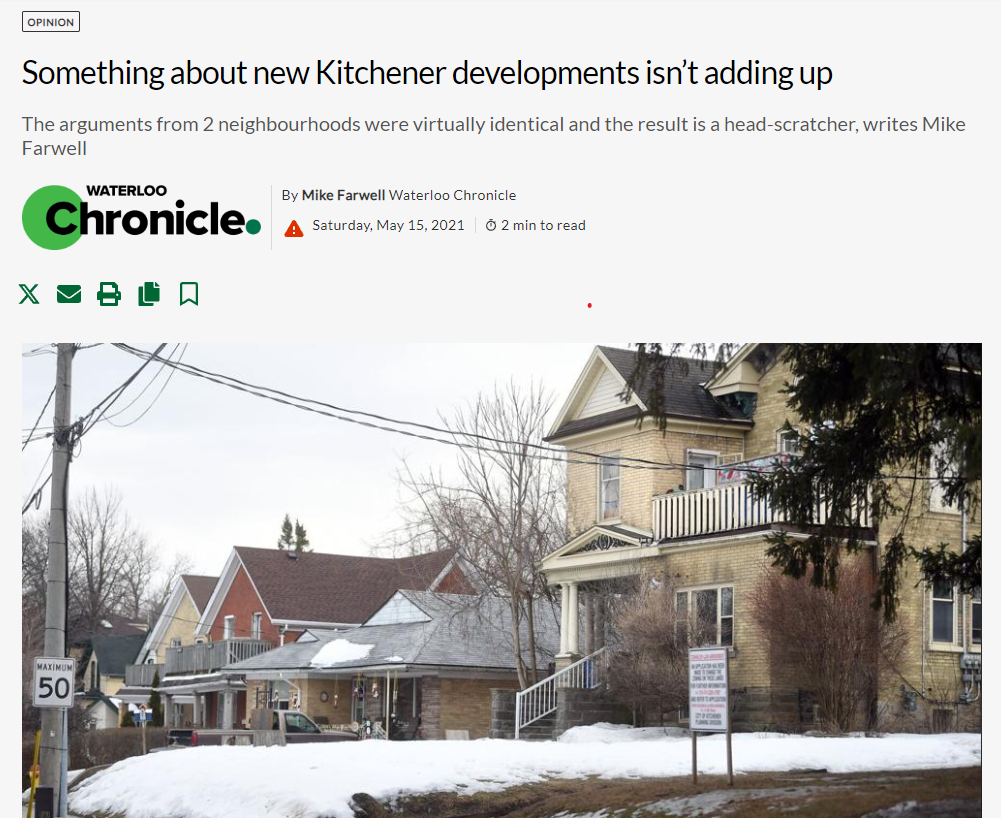
It was a Waterloo Chronicle article that reached me via therecord.com that set off my musings for this week: an opinion piece by local Barnbuilder and media personality Mike Farwell that raises questions about some recent planning decisions.

What caught my attention, first of all, was finding this essay about two controversial Kitchener highrise projects in Waterloo’s weekly. Is it the KW Chronicle now? If so, people in Waterloo should complain. What’s happened to the Kitchener Post? K-townsfolk should be concerned. 

This touches on my opinion, which I’ve expressed repeatedly in these missives, that KW-centricity doesn’t serve any of the region’s eight polities very well, and that it is the people of Kitchener who have been short-changed the most.      

I also have an opinion on the issue that Mike Farwell raises. He’s right, the story as he tells it doesn’t add up: If, as he contends, the “arguments from both neighbourhoods were virtually identical”, the decision to allow the highrise at Frederick and Avon to go ahead while scaling back the development at Queen and Mill is indeed “a head-scratcher”.

Farwell tells the story the same way The Record editorial on the Blair situation does: The three situations are all treated as NIMBY stories, neighbours rising up against a proposed change to say “Not In My Backyard”. But in the case of the village of Blair and the development at Queen and Mill, it is more than just the neighbours who have come forward to express concern. 

Blair, as I suggested two weeks ago, is arguably the most significant heritage precinct in all of Waterloo Country. Mill Street is one of Kitchener’s original roads, adapted, they say, from an Indigenous trail pre-dating colonial settlement. In both instances, voices from all over the region concerned about heritage conservation and appreciation have been speaking up. 

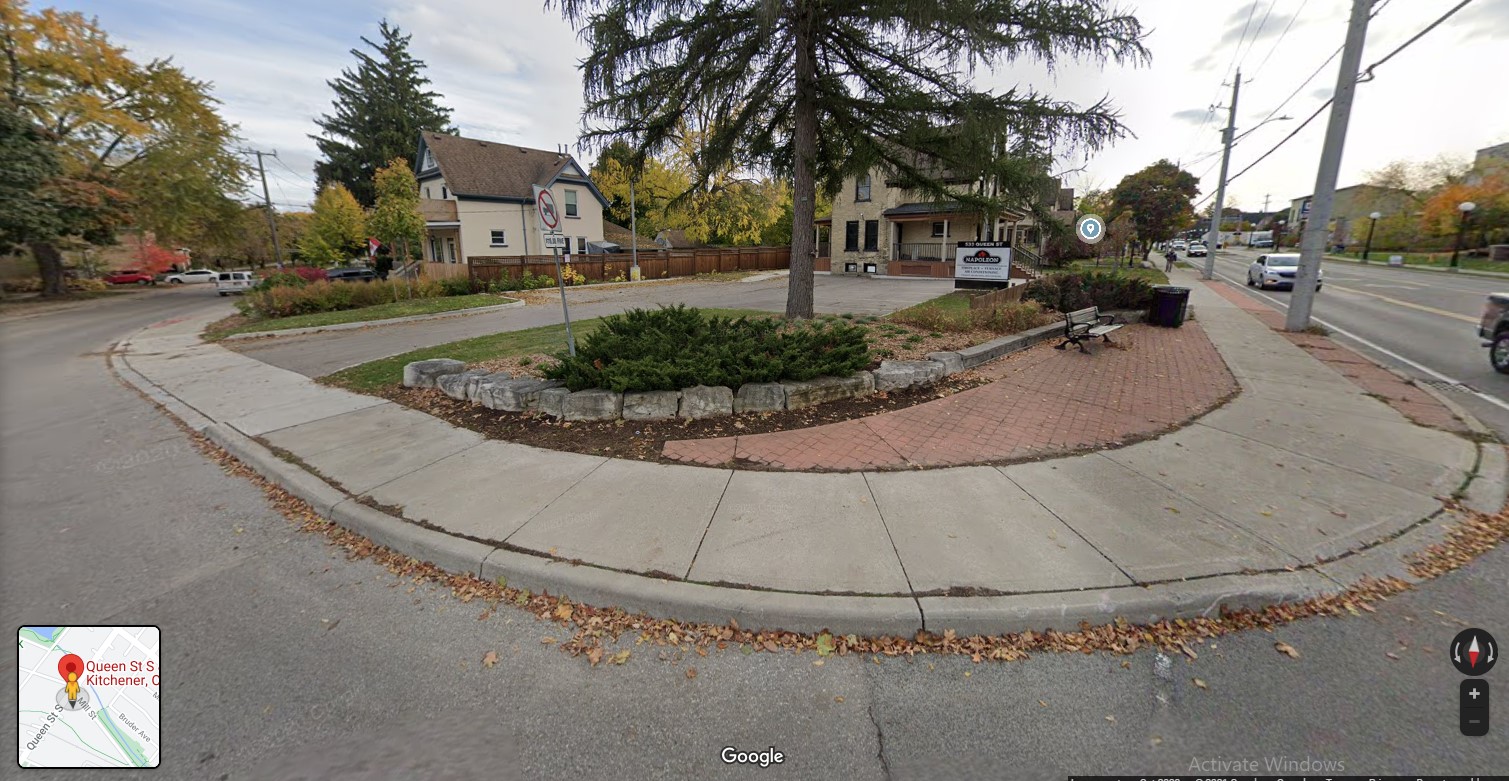
Mill and Queen looking south — Google street view screenshot
I’m certainly concerned about heritage conservation, but haven’t said anything in public about the Mill Street situation. This is partly because the respectful side seemed well-represented. I’m also familiar with the developer. I can see the Polycorp offices from the south windows of my coop at the co-op, situated in a magnificent “Original Kitchener” heritage structure. I hoped, and trusted, that they cared enough to at least listen to our concerns.

But the main reason I kept mum is because I’m a firmly convinced and deeply committed “conservatory progressive”. 

As a progressive, I know time doesn’t stand still. There is no going back to some imagined golden past. It is today that matters, in relation to tomorrow: The future will be the world we choose to make it, or what we allow to happen.

If this forward-looking attitude sounds reasonable, my “conservatory” bent may not: I’m not just calling for the protection of a few exceptional architectural gems from the ravages of heedless profit-seeking, neglect and time. I’m anchoring my hopes for the future on an imminent emergence of a profound respect for all heritage, cultural as well as natural.  

The corner of Mill and Queen lies within what I like to call “Original Berlin/Kitchener”. Every village, town and city founded 100 or more years ago has a foundational core: Basically, this means all precincts that predate the rise of standard suburban growth patterns centred around the automobile. 

Just as we now have a “Countryside Line” to protect the waters, the farmlands and the forests of Waterloo, I’m advocating for an “Original Town Line”, with distinct planning practices for contiguous areas built before 1950 or so, as well as special consideration of everything that has been built since then.  

It’s not that one is better than the other; it’s that they’re different. The suburbs are designed for getting around in cars; the older building patterns are suited for people walking, cycling and for slower, mostly horse-drawn traffic. 

And whether it’s within the Original Town Line or beyond, my preference is for the kind of “socially conscious and sustainable” building design that is practiced by Anne Lacaton and Jean-Philippe Vassal, whose work has been honoured with the 2021 Pritzker Architecture Prize. 

When I heard about “their reverence for pre-existing structures, conceiving projects by first taking inventory of what already exists”, and their resolve to avoid any and all demolition, the thought that immediately came to mind was: “This is the future.”   

Such views, however, are only just beginning to emerge. My sense is that entering the fray over the future of Blair or the junction of Queen and Mill with a battle cry like “never demolish” would likely do more harm than good to the cause. 

So instead of taking a side, I’m returning to the point I tried to make two weeks ago: This isn’t a battle. The objective is the best possible outcome for the village or neighbourhood, for Cambridge and for Kitchener; for the people of the region today, and for people who will live, work, play and learn here throughout the rest of the century and beyond. These are not matters for debate, but for patient, comprehensive and considerate deliberation. 

Civic deliberation, which in this context means democratic deliberation within a municipality and/or a watershed, is best served by avoiding any kind of two-way standoff, and starting by broadening the view of what needs to be taken into account, thereby complicating the picture.

To be effective, inclusive and meaningful, civic deliberation needs to move “beyond opinion”. 
Mike Farwell’s essay got me thinking, and I appreciate that. Rather than challenge his view that Mill and Queen is a better location than Frederick and Avon for density, the intention here is to complicate the picture, not only by drawing attention to the heritage factor, but also by raising the the fundamental question that Rick Haldenby of Waterloo Architecture is going to address in his upcoming for Kitchener Public Library: “What Kind of City Are We Building?”

Let’s do it for Canada. Let’s do it as Canada.

As originally submitted for publication by CultKW, a project of THEMUSEUM, on June 17, 2021.

John Gast’s painting of “Manifest Destiny”, “American Progress” or “Spirit of the Frontier” — wikipedia

Canada Day is coming up soon, preceded by the rest of the “Celebrate Canada” events recognized by the Department of Canadian Heritage.

It begins with National Indigenous Peoples Day, on the summer solstice. 

The traditional Quebec holiday known as Saint-Jean-Baptiste Day, now Fête nationale du Québec, happens June 24th. 

June 27 is Canadian Multiculturalism Day. 

Before Brexit, I thought Victoria Day — Fête de la Reine — could be added to the lineup as a celebration of British Canada. Now I like to think of it as a kind of Fête nationale d’Ontario. 

There’s also Waterloo Day, June 18, the anniversary of the final defeat of the self-crowned Emperor Napoleon. It’s as good a day as any to celebrate this country as “the land of the Canadas,” of towns, cities, and other human habitations grounded in place.

Juneteenth — June 19 — has emerged as another celebration, in this case of emancipation form slavery in the United States with a Texas focus. The counterpart here, in the Caribbean and other parts of the world, is the anniversary of the abolition of slavery in the British Empire on August 1st, 1834

These are all full of promise as celebration opportunities. However, it has become increasingly clear, year by year, that there are matters that need to be considered, studied and adjusted before we can celebrate Canada and its constituent elements with anything like the confidence, pride and joy that was prevalent during the centennial, 54 years ago.

One of those urgent priorities was eloquently and movingly summarized by Senator Murray Sinclair shortly after the news broke about the discovery of unmarked graves of 215 children on the grounds of Kamloops residential school.  

My last column ended with a resolve to “keep a hopeful, prayerful silence” in the wake of the news from Kamloops.1 

The hopeful aspect was the clinging to the possibility that the discovery may prove to be the turning point for facing the truth and moving toward reconciliation. I explained that prayerful side of the resolve was to make my comments about Canada’s relationship with Indigenous peoples a kind petition, not to any political leader, but “to my fellow citizens here on this ground”:

Let’s, once and for all, come together, regardless of our various ethnic backgrounds, faith traditions, political leanings and economic situations, to support one another in finding the courage to face the truth, accept our complicity, shoulder the responsibility, and get to work, each in our small corner, according to our own lights, doing everything in our personal power to make this right.   

I’m writing with the question “what can a poor boy do?” still top of mind. What can this old, poor white male (he, him) settler Canadian of Atlantic European extraction do to help make this right?

Not much. But I’m confident that we can do what needs to be done together, as a people. We can lead, and when we do, the governments will follow. 

In the wake of recent developments, following a precedent set in Vancouver, Canada Day celebrations have been cancelled in Wilmot Township. It was Canada Day in Wilmot, a committee that, according to a recent communication, “supports reconciliation and is working toward the direction of the two row wampum,” that made the decision to hold back on the celebrations this year. 

As Wilmot Councillor Angie Hallman, who chairs the group, has explained, “It’s a one-year pause to respect grieving Indigenous people in our community. … One year without fireworks is compassionate and appropriate.”  

A public statement from the committee proposes, much like I did two weeks ago, quiet reflection, taking reconciliation to heart, and making it personal:  Together, Canadians must do more than just talk about reconciliation; we must learn how to practice reconciliation in our everyday lives – within ourselves and our families, and in our communities, events, governments, places of worship, schools and workplaces. And most importantly for all of our children and future generations.

Meanwhile, there are reports that the Township has also decided to leave the statue of Canada’s first Prime Minister in storage indefinitely, which may mean a merciful end to the Prime Ministers Path project in Baden. In Toronto, the new beeldenstorm, which I’ve been observing with ancestral terror and dismay, has extended its fury to a statue of Egerton Ryerson at the university named after him. 

“You can feel change coming like a train rumbling toward you,” Luisa D’Amato comments in the Waterloo Region Record. “In this time of grief and rage and reckoning, neutrality cannot exist.” D’Amato goes on to ask: “How long before the other statues representing the rotten foundations on which this beautiful country is built must come down too, so we can understand ourselves better?” 

I’m not neutral, but I’m not fully in line with any prominent current position either, especially any stance determined to separate the sheep from the goats. If you say “neutrality cannot exist,” you’re suggesting this is the direction we’re headed. I hope not. The greatest danger we face is the prospect of, again following the U.S. example, forming two hostile, irreconcilable camps and fostering a culture of fear, blame, hate and violence. 

I haven’t changed my view that targeting long gone personages like Ryerson and Macdonald to carry the blame is a distraction from the main concern, and a hindrance to facing the truth. In terms of what it implies for Canada, we’ve reached what looks like an impasse. This isn’t just a stain on an otherwise glorious national record. It is Canada itself that is at stake here. 

That’s why, in my “petition” last week, I wrote “let’s do this for Canada … and let’s do it as Canada.”  

I recommend the long view of the history of Canada in part because the achievement of home rule here 154 years ago no longer looks like such a great accomplishment. From an Indigenous perspective, settlers in power spelled disaster here in the True North strong and free, just as it did after settlers in the 13 rebellious colonies declared their independence 90 years earlier. The settler republic set patterns of continental nation-building that Canada has been following almost to the letter, and this remains the dominant pattern to the present day. 

And yet, I wouldn’t describe such foundations as “rotten.” To begin with, a “country” is more than just whatever the current arrangements are for managing the day-to-day affairs of a modern nation state. Our “beautiful country” is the land, the waters, the peoples and our cultural inheritance, not a constitutional order. We have been making progress here in Canada, real progress, not just the old-fashioned “man and his world” dominion over the lands, waters, plants and animals kind of progress. The fact that we’re finally getting around to facing this problem is in itself evidence of this. 

Looking back needn’t involve longing for a return to some lost ideal. And self-loathing will not help us accomplish anything. There are some saving graces in the story of Canada, especially continuity over time, peaceful transition and an emerging good will. We know better, and can do better than our forebears did during the years when Macdonald, Laurier, King, Diefenbaker or Trudeau Sr. presided over our parliament.To build on what has been accomplished so far, what we need is hope, confidence and a firm resolve.  

The overarching truth that needs to be addressed is not connected to the sins of any particular individual, or malevolent government policy, or the ancient ways of kings, empresses and popes, but the frontier spirit of manifest destiny, dominion from sea to sea, and “go west young man”: i.e. the distinctly North American conception of progress as expansion, mastery, exploitation and extraction.

The widely popular painting by John Gast at the top of this post shows how “American Progress” played itself out as the republic fulfilled its destiny. The image is equally applicable as an allegory of how this Dominion has been expanding from sea to sea to sea. The driving force was not old-fashioned colonial aggrandizement, but high modern nation-building in two independent settler democracies.    

To reconcile, we’d be wise to go back to the beginning. This means, as the Canada Day in Wilmot group has sensed, starting to work “toward the direction of the two row wampum.” 

This would take us to 1613, 254 years before the achievement we celebrate on Canada Day, and 163 years before the events our cousins to the south celebrate on July 4. It takes us to the development of an understanding between people of the Haudenosaunee Confederacy, and a few adventurers from the United Provinces of the Netherlands who had come to set up a factorij — a trading post — on a great river that would give them access the interior of Turtle Island. 

According to an Oneida source, Two Row Wampum Belt “symbolizes the agreement and conditions under which the Haudenosaunee welcomed the newcomers to this land.” It was, and remains, an understanding, starting with an insistence that this is a relationship between equals standing on the same ground:

You say that you are our father and I am your son.” We say, ‘We will not be like Father and Son, but like Brothers’.” This wampum belt confirms our words. These two rows will symbolize two paths or two vessels, traveling down the same river together. One, a birch bark canoe, will be for the Indian People, their laws, their customs and their ways. We shall each travel the river together, side by side, but in our own boat. Neither of us will make compulsory laws or interfere in the internal affairs of the other. Neither of us will try to steer the other’s vessel.

This is not a deal or a contract; it is a framework for a relationship. The British continued to endorse this framework after they seized New Amsterdam, just as they carried on with the various understandings that defined the French presence on Turtle Island before the fall of Quebec. The silver Covenant Chain is one of the foundations of Canada as it has evolved over the centuries, so called because when silver starts to tarnish, all you have to do is polish it. It is the antithesis of “rotten”.

via University of Windsor
The long view from here also encompasses the Dish With One Spoon principle about how land can be shared to the mutual benefit of all who live on it. The concept, which goes back at least to 1142, was an important part of the Great Peace of Montreal in 1701.

I claim no special knowledge of these concepts, but a naive view may have some advantages. To me, these understandings seem profound, wise, more relevant than ever before, and full of promise. 

In the case of the Two Row Wampum, it means mutual respect, peaceful coexistence, and a brotherly, sisterly kind of friendship. 

One Dish, One Spoon addresses “our collective responsibility to each other and the Earth: we should take only what we need, leave enough for others, and keep the dish clean.” 

None of the parties involved with these original understandings over time —  Haudenosaunee, Anishnaabe, British, French, Netherlanders, Yorkers, Bostonais, Québécois 2  — were able to consistently live in accordance to their true meaning. But the agreements still stand, especially here in Canada, where we’ve never overthrown a government or broken completely with the past. While all those atrocities were happening, we still polished that silver now and then, scarcely knowing what this actually meant. Two Row and One Dish, One Spoon are part of what we are, and may hold the key to get beyond the impasse we’ve reached as Canada Day 2021 approaches.  

I’m talking about the view from here, in Laurentian Ontario; things look different in Pacific Canada, Newfoundland, Nunavut, or in the territories around Hudson’s Bay that were owned by the great fur corporations and then ceded to the settler dominion, or in Jamaica, Trinidad, Louisiana, Texas.

This is not the whole story. But as a Canadian who lives, works, ponders and associates in the Great Lakes region of the interior of Turtle Island, I’d happy to cling to Two Row and One Dish as our equivalent of the Magna Carta, our Declaration of Independence: time-honoured wisdom that explains to the world who we are, why we exist as a distinct landed sovereignty, and what our purpose, mission and, hopefully, destiny is for the 21st century.

This is the kind of purpose and mission we can take home to Wilmot, to Kitchener, to Hespeler, to Maryhill, to St. George, to Paris, to all of Grand River Country, a land within a land within a land. The land immediately around us can be imagined as a bowl within the larger bowl or dish covered by the Great Peace of Montreal signed on August 4th, 320 years ago. 

One thing this poor boy can do is propose we add August 4th to the “Celebrate Canada” sequence.  

The image is copyright, so I’m not going to include it here, but check out this map of One Dish, One Spoon country from The Common Pot, by Lisa Brooks.    

1 This Time It’s Different – Thursday June 3 2021

Today marks the first anniversary of the Kitchener Solidarity March for Black Lives Matter, which gathered near the entrance of Victoria Park to form the procession that began to move at 5pm.   

By terrible coincidence, there will be a vigil tonight at 7pm in the Clocktower Common area behind that same Victoria Park entrance in memory of the 215 children found buried in an unmarked grave on the grounds of Kamloops Residential School in British Columbia, Canada. 

A year is not very long. There was a feeling among Black communities in the United States that this time it would be different. I still live in hope that the reaction to the murder of George Floyd will prove to be the turning point in facing truth and moving toward reconciliation. 

The discovery in Kamloops is graphic evidence of how, here in Canada, from coast to coast to coast, from the day we established home rule until very recently, Indigenous lives have not mattered, not even the lives of little children. 

This is too solemn an occasion for carrying on with playful musings or smart aleck pokes at familiar national storylines. Today, I’ll keep a hopeful, prayerful silence.

2 Here’s the list of signatories for the Peace of Montreal in 1701 (wikipedia):

  • Haudenosaunee
    • Onondaga, Seneca, Oneida and Cayuga, represented by Seneca orators (Tekanoet, Aouenan, and Tonatakout) and by Ohonsiowanne (Onondaga), Toarenguenion (Oneida), Garonhiaron (Cayuga), and Soueouon (Oneida), who were signatories.
    • Mohawk, Teganiassorens
    • Sault St. Louis (Kahnawake) Mohawk, represented by L’Aigle (The Eagle)
    • Iroquois of La Montagne, represented by Tsahouanhos[6]
  • Amikwa (Beaver People), represented by Mahingan, and spoken for by the Odawas in the debates
  • Cree, or at least one Cree band from the area northwest of Lake Superior
  • Meskwaki (the Foxes or Outagamis), represented by Noro & Miskouensa
  • Les Gens des terres (Inlanders), possibly a Cree-related group
  • Petun (Tionontati), represented by Kondiaronk, Houatsaranti and Quarante Sols (Huron of the St. Joseph)
  • Illinois Confederation, represented by Onanguice (Potawatomi) and possibly by Courtemanche
  • Kickapoo (attendance is disputed by Kondiaronk)[6]
  • Mascouten, represented by Kiskatapi
  • Menominee (Folles Avoines), represented by Paintage
  • Miami people, represented by Chichicatalo
  • Mississaugas, represented on August 4 by Onanguice (Potawatomi)
  • Nippissing, represented by Onaganioitak
  • Odawa
    • Sable Odawas (Akonapi), represented by Outouagan (Jean Le Blanc) and Kinonge (Le Brochet)
    • Kiskakons (Culs Coupez), represented by Hassaki (speaker) and Kileouiskingie (signatory)
    • Sinago Odawas, represented by Chingouessi (speaker) and Outaliboi (signatory)
    • Nassawaketons (Odawas of the Fork), represented by Elaouesse
  • Ojibwe (Saulteurs), represented by Ouabangue
  • Potawatomi, represented by Onanguice and Ouenemek
  • Sauk, represented by Coluby (and occasionally by Onanguice)
  • Timiskamings from Lake Timiskaming
  • Ho-Chunk (Otchagras, Winnebago, Puants)
  • Algonquians
  • Abenaki, represented by Haouatchouath and Meskouadoue, likely speaking for the entire Wabanaki Confederacy[6]

Great Peace of Montreal with the signatures. If we take this to be our Declaration of In[ter]dependence, this “Outilirine Chief”, who may have been signing for the Cree people, can be our John Hancock.