This is a shorter version of an Evening Muse post from December, 2024. It’s about the vitalization of my city’s original civic, cultural and commercial centre, which is something I’ve been interested in since the October, 1993. This was part of a series about “turning the idea of a ‘capital of culture’ on its head, and showing the world who and what we are by working together as the five cities and seven nations of Grand River Country to organize a ‘Culture as Capital ManiFest and Homecoming’ event for, say, 2026 or 2027.”
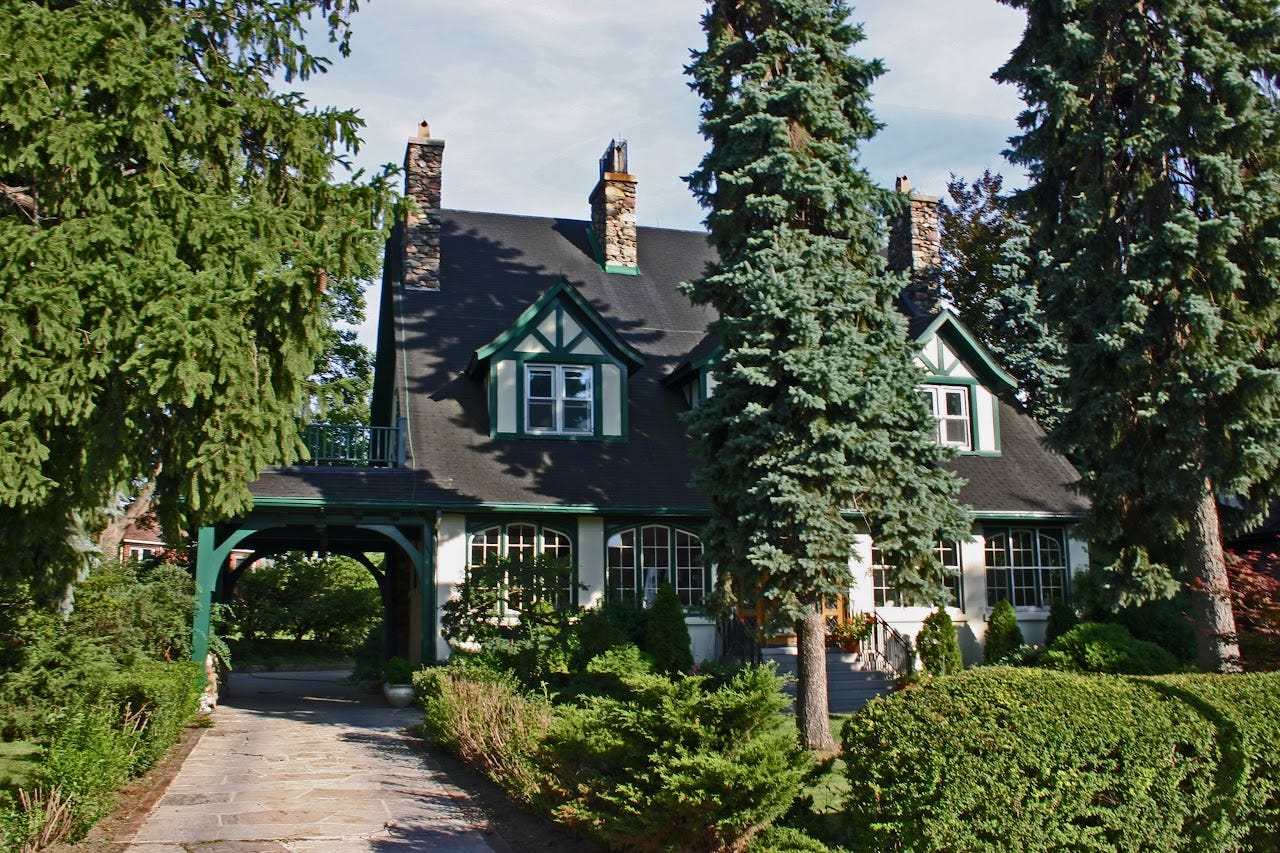
Bread & Roses Co-operative Homes 307 Queen St S, built 1879
For anything like a Culture as Capital initiative to become a reality, all sorts of ingredients will have to be assembled, while a complex range of factors, wills and energies are mustered, harmonized and set into motion. This will take time. But we don’t have to wait until everything is in place to start actually doing things. The best time to begin is now. The best place is right where you are. And the best way to proceed is step by step, starting with what is immediately achievable.
As a step towards a year-long, watershed-wide “Culture as Capital” manifestation, I propose an experimental “Summer of Learning & Discovery” in an actual place: Queen Street North and South, in the heart of Kitchener.
Because coherence in the watershed and adjacent areas is so weak, the first step towards “Culture as Capital” manifested in real places is best centred around a geography that is more readily reachable in terms of communication, visibility and mobility. The terrain has to be fathomable, and it has to be walkable. There must be assets in place that can serve as a foundation to build on. And there needs to be space to move freely about, with ample room to build and grow. Kitchener’s Queen Street axis meets all these requirements.
An axis is “a main line of direction, motion, growth or extension.” Queen Street as a cultural focal point extends from the Green Gables Guest House, home of Music at Green Gables, down to where what I like to call the Preston-Berlin Rail Trail (officially known as the “Iron Horse”) crosses the roadway, and all that’s within easy reach on foot from any direction, at any point along the way.
Green Gables Guest House, at the top of Queen at Lancaster
There’s a lot to work with in this district, including:
Green Gables Guest House / Music, KW Art Gallery, Raffi Armenian Concert Hall, CITS Studio Theatre, Timothy Schmalz’s Fallen Firefighters Memorial, Church of the Good Shepherd (Swedenborgian), Kitchener Public Library Central, Greater KW Chamber of Commerce, Holly’s Cafe & Gallery at 27 Roy, Apollo Cinema, St Andrews Presbyterian, St Peters Lutheran, RoW Headquarters, Registry Theatre, Suddaby School, Governors House & Gaol, including under-utilized porch, courtyard and garden, Regional Archives, Heimie Place, Hibner Green, Vogelsang Green, Goudies Lane, Siegner Lane, Clemens Lane, Conestoga College DTK, Speakers Corner, SDG Idea Factory, THEMUSEUM, Conrad Centre, Green Light Arts, The Walper and Crowne Plaza hotels, three under-utilized 20th-century style parking garages, a half-empty 20th-century style shopping mall, The Working Centre, Historic St Paul’s Lutheran, St Matthews Lutheran, including the new St Matthews Centre, Benton St Baptist, Schneider Haus, Victoria Park, including Lake, Boathouse, Pavilion, Museum, and Bandstand, Queen’s Green Community Garden, REEP House … .
With a radial approach, there is no need to set limits on what can be included, but walkability is paramount. Assets and energies within easy walking distance include:
Kitchener Market, Willow River Centre, Rose Cafe, Fresh Ground, Yeti, Serrinia … , Crushed Almond, Aura-La … , Globe Studios, including CAFK+A, Inter Arts Matrix, Studio 38, Corner Studio, Courtland School, Cameron Heights, Dallas, Wax and Elements nightclubs, St Mary’s Roman Catholic, Downtown Community Centre, St John the Evangelist Anglican, Civic Hub, First Church of Christ, Scientist, Matter of Taste, Pyrus, Lucero, Smile Tiger, First Church of Christ, Scientist, Laurier Faculty of Social Work, UWaterloo School of Pharmacy, The Tannery, City Hall, a second 20th-century style shopping mall, almost completely empty, 44 Gaukel Creative Workshop, Treehaus Collaborative Workshop, Gaukel Block, Charles Street Terminal, Clock Tower Commons …
and, of course, that marvelous constellation of neighbourhoods that surround downtown Kitchener, including the growing number of “vertical villages” in and near the city’s traditional civic, commercial and cultural centre.
The idea is to develop a program of offerings that have an exploratory or educational component, building on what has already been accomplished and making full use of resources that are currently available within range of this Queen Street axis. It should be activities that require some effort, but that are also for enjoyment more than any kind of practical purpose or benefit. The objective is deepening knowledge and appreciation of our shared cultural inheritance in all its manifestations as an end in itself, for the enjoyment of it.
Some examples of existing programs with an exploratory element that come immediately to mind are:
More than any of the other examples cited above or below, it was Daniel Lichti’s Art of Lied Music Festival and Mastercourse project at St Andrews Presbyterian and other Queen Street North and South locations last July that inspired my thinking in this direction, beginning almost a year ago now, when I first heard about his plans and interviewed him about them for the “community radio magazine” I send out into the world every week.
Other examples that drew my attention for their “learning and discovery” aspects as the summer unfolded include:
Open Ears 2024, a downtown highlight since 1998, which ran May 30 – June 2, and included presentations from
The Creek Collective, a kind of festival within a festival. This was followed by
I was out of town when Mama’s Cookout & Music Festival happened on July 13, but this project of Rufus John’s Freedom Marching initiative applying “the creative power of Art, Education & Activism” also deserves a place on this list.
Capping off an extraordinarily bountiful summer were two more presentations that struck me as full of promise:
Caribana Ignite! along King and from City Hall down Gaukel August 23 -25, the original Caribana Arts Group’s “celebration of the legacy, culture, and spirit of the Caribbean diaspora” as manifested, for the first time, in Downtown Kitchener, and
To my mind, each of these happenings raised the bar in some way. As we approach the end of 2024 and the beginning of another planetary journey around the sun, let’s take stock of these kinds of accomplishments, and ask: What else belongs on this list? Could these precedents serve as a foundation for future developments?
Now is the time to start thinking about what could be added to these offerings and others like them to create a critical mass that can be presented as an experimental program throughout the May to October planting-to-harvest growing season, if possible, starting in 2025.
How about a “Summer of Learning and Discovery,” with emphasis on exploration and appreciation? Building our appreciation for music, dance, beauty, history, our city, our watershed, our country and for all the cultures that are part of the fabric of our communities.
Meanwhile, doing an inventory of all the resources for learning and discovery available in the area, , including space for gathering, teaching, presenting, screening, discussion and working, would be very useful for the next phase of utilizing, enhancing and building on what exists.


 Martin de Groot