
originally published Wednesday, August 4, 2021, for CultKW, a project of THEMUSEUM
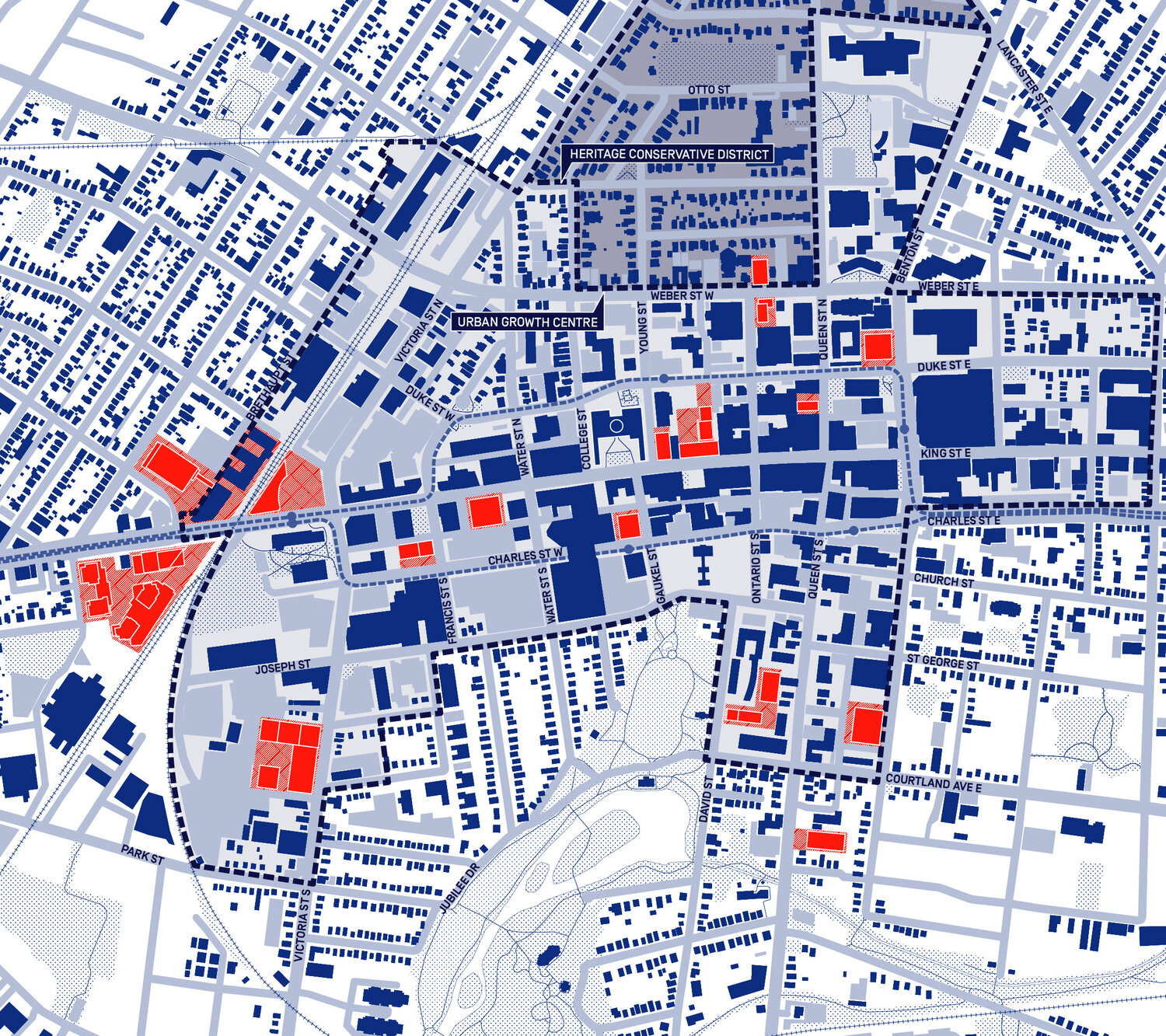
image from Inten-City Walking Tour of Downtown Kitchener
Last month, I underscored the significance of the “we” in Waterloo Architecture Professor Rick Haldenby’s question: “What kind of city are we building?”
The present tense is appropriate: What we do now, and in the immediate future, is what matters, simply because now is the only time we can make decisions and begin to act on them. Yesterday is gone; tomorrow may be too late.
We have some choice in the matter, and, for anyone who chooses to make civic engagement part of their life, there’s a role to play. So the next question becomes: “What kind of city do I want to help build?”
Cities and towns cannot be willed into existence. It takes time: Kitchener, Galt, Waterloo, Preston, Hespeler, New Hamburg or Elmira as they stand today were lived into reality. The building went on, day by day, generation after generation, each in accordance with their particular time: pioneer days; boom years; war years; times that were ripe with possibility; times of fear and hate; times of contraction, of destruction, of depression.
True city-building or “place-making” is incompatible with cock-sure, high modern, “Man and His World” presumption and arrogance.
So this essay on what kind of city I hope to help build is offered modestly, on a take it or leave it basis. If you take it, in whole or in part, please fold whatever you find useful into your own inclinations and commitments.
As I’ve tried to explain at various points in these posts, I love my city, and I love the urban-rural-fluvial configuration within which Kitchener is a constituent element. This loyalty, this fondness is the closest I’ve been able to come to feeling anything like the “true patriot love” commanded in our confederal anthem, or any inkling of assurance that I have a place to discover, to stand, to grow in “Ontari-ari-ari-o”.
The first notion that comes to mind about what kind of city I want to help Kitchener become is from a recent article about Japanese life today in Nikkei Asia, a news weekly produced by the same corporation that owns Financial Times, the London-based daily.
Things are hard for many in Japan, especially for older people. According to the article, “15.7% of the Japanese population lives in relative poverty, the second-highest level among Group of Seven nations after the United States.”
How and why so many people in Japan live in poverty is an important question. But what caught my attention here is an advertising motto posted in large letters on the external walls of a “cavernous wholesale supermarket” specializing in cheap staples: “Ordinary People Welcome”.
The Kitchener I know and love has always felt like a place where “ordinary people” could feel welcome, and my hope for the future of my city is that this remains a fundamental part of its purpose and character.
The second notion emerged after I read a recent restaurant review by Jasmine Mangalaseril with the headline Darlise Café poised to embrace downtown’s future (Waterloo Region Record, June 24, 2021).
It was the optimism of Cafe co-owner and namesake Liz Howie that struck me: Like the Walper Barbers and now the Walper Cigar Shop, this is a business that had to move when a new ownership with a new vision for Kitchener’s landmark hotel took over eight years ago.
Mangaleseril reports that Howie is
<< enthusiastic about downtown Kitchener’s future. Even though the pandemic emptied office buildings and temporarily closed shops and community spaces, over the past few months she’s glimpsed the vibrancy that awaits the core.
“My darkest days here during COVID were when I wasn’t seeing anybody. When it first started, it was a ghost town,” Howie said. “My happiest memories of that time were when they did the Art Walk. So many people were here for the first time and then walked around. … Not just King Street: all parts, down the back alleyways and everywhere. It’s a very cool idea.”>>
These comments inspired an optimistic social media post from me that day:
<< I used to go to the Darlise Cafe fairly regularly when I worked next door [at the Commons Studio, above the Queen Street Commons Cafe] and have known the Howies since their days at the Walper. So I’m really glad to learn that they’ve managed to hang in through all the tribulations of the pandemic, and am looking forward to returning, provided we don’t mess things up and allow a fourth wave of this plague to hit our towns and cities.
Like the exiled Walper Barbers, I think of Darlise as a saving remnant of the real Kitchener I know and love: A welcoming community, with no pretensions to being hip, cool or whatever passes for classy at the moment, but a respect for people as they are, a commitment to quality and honest value, pride in craft, and a genuine friendliness that trend-setters and clever marketing types cannot possibly match.
I’m encouraged by the optimism for the future of the historic heart of the city expressed in this article: I’m not espousing a nostalgia for soon to be lost values, but confidence that, regardless of the changes underway, the real Kitchener will not only prevail, but flourish, and be appreciated, even cherished, as never before. >>
I appreciate what these investors have done for the venerable hotel. Their improvements will help ensure that it remains standing for another 128 years at the junction of Queen and King, where East meets West and North meets South. Together with the freshly and sensitively restored American Hotel, and the majestic CIBC building, this is arguably the most significant concentration of architectural heritage treasures in the city.
But when I go into the newly appointed Walper, I don’t feel welcome or at ease like I do at the Darlise Cafe or in Linda’s chair at the Walper Barbers over on Joseph Street. In fact, given my age, my economic status, my ethnic and cultural background, my personal inclinations, and my memories of the Walper during a time when it was an almost daily part of my life, the renovated public areas of the hotel feel like they’re designed to make me feel estranged, uncomfortable, unwelcome.
But that’s my problem, and I’ll get over it. The place may feel exclusive, but I know it is open for business, including mine. Resentment, and voluntary exclusion, indicate low self-respect. I am not interested in writing a protest essay, railing against “gentrification”.
But I do think that Kitchener’s extraordinary ordinariness is something worth cherishing and protecting. There were wealthy people here during the city’s formative years. Busy Berlin was a prosperous place. But the rich weren’t ostentatious or pretentious, preferring a plain, firmly grounded style of living. And citizens of modest means lived rich, full lives: The vast majority owned the homes they lived in.
I find the idea of “ordinary people”, and making sure they are welcome, much more appealing than the emphasis on favouring the “middle class” that our current federal government has been making so much of. The “Ordinary People Welcome” sign in the Japanese supermarket is aimed at what we call the poor and disadvantaged — those people, objects of our pity, our charity, and too often, our contempt. “Ordinary”, meaning most of us, not those others, acknowledges that we’re in this together.
This ordinariness, this lack of pretence and ostentation, is especially noticeable in Kitchener, but it extends to all of Waterloo Country. Hespeler, Preston, New Hamburg and Elmira are similarly modest and unassuming. Galt’s beauty reflects confidence, self-respect and pride of craft more than wealth and privilege. Even Waterloo, for all its uppity, smart city ways, is a down home kind of place, whose small town, countrified roots are never far from the surface. It says something about our region that the classiest, most upmarket area is the Village of St Jacobs in the heart of quilt, maple syrup, summer sausage, horse and buggy, “No Sun Sales” country.
Mainstream Canadian society has always seemed more stratified than Waterloo County was and remains . But in relative terms, compared with the two global empires that we’ve been living in the shadow of from the beginning, Canada is a land of “ordinary people”. There’s nothing like the class-ridden society of the English motherland, nor are we cursed with the intricacies of the U.S. caste system based on race and ethnicity.
The association of the arts and even heritage with class distinctions is one of the things that makes culture-related advocacy work so difficult here in Kitchener, and throughout Waterloo Country as a whole.
One of my first introductions to the Waterloo Regional Arts Council was a presentation to a municipal task force decrying the association of culture with lowly concerns like parks and recreation, including a particularly memorable line about “conducting the KW Symphony with a hockey stick.”
I also remember a manager of an important arts organization, freshly arrived from Toronto, contemptuously dismissing his new home as “just a hockey town,” and promptly moving to Guelph.
You cannot be an effective leader or manager in the Greater Waterloo cultural sphere without being aware of, and respecting, this “ordinariness”.
Kitchener’s plain, unpretentious nature doesn’t align with the hard hat and lunch bucket stereotype familiar from big city media. It includes that commitment to quality, honest value, and pride in craft I mentioned earlier. And it includes culture: all those choirs; all those orchestras, chamber groups, citizens bands, amateur theatre traditions; it includes that vital musical theatre scene.
I remember, not so long ago, a survey that asked Kitchener citizens what public service they valued most, and the public library came out on the top of the list — ahead of police services, the fire department, parks, and the arena. That was a proud moment for me as a Kitchener citizen.
So what can I do to make sure that the city I know and love remains a place where “ordinary people” can feel welcome?
To begin with, I’m proposing we make this part of who and what we imagine we are: a fundamental component of our identity, purpose and character.
We can explore, deepen and strengthen this identity through almost any kind of civic engagement. But I’d really like to go beyond lobbying the city to do things on our behalf.
I have a half-baked idea about a kind of “Friends and Neighbours” club with a local civic engagement focus.
What I’m imagining is tailored to the original Kitchener, i.e. all parts of the city that were laid out and built up before 1950 or so. But it could be done in any city or town with an authentic foundational core. And for people living outside the core, this is just as much their city as it is for those of us who are fortunate to live here.
I’m thinking about a process through which we keep asking ourselves what kind of city we’d like to build; set some personal objectives, and find people to talk, work, learn and get around with.
Among other things, I’d like to find a way to welcome every one of those 6000 new neighbours who will be moving to the city’s legacy civic and business area as those construction projects reach completion, one after the other. I’m proposing we welcome them in person, as citizens, as they arrive, and offer them opportunities to get involved with their new community.
I’d also like to find ways to join hands in supporting ordinary people friendly downtown businesses like the Darlise Cafe, Matter of Taste, Legacy Greens, Full Circle, Cafe Pyrus, The Yeti, the Kitchener Market food court vendors, Ellison’s Bistro, East African Cafe, Rainbow Caribbean, Queen Shawarma & Kabab, Mi Tienda Latina, Walper Barbers, Walper Cigars, KW Bookstore, A Second Look … .
I’d like to see the Queen Street Commons Cafe back in business, the only open, public “third space” food and beverage facility I know of where everyone, ordinary, privileged or troubled, is truly welcome.
By the same token, this civic association I’m imagining would look for ways to support, and take full advantage of, all those modest-scaled, grass roots culture-related endeavours I mentioned in my last column, like the Registry Theatre, Globe Studios, Inter Arts Matrix, Textile Magazine, Kwartzlab, Green Light Arts …. and help launch a dozen or more additional projects for all those new downtowners to get involved with.
The kind of city I’d like to help Kitchener become will be true to its origins, and respectful of its heritage, but comfortable in the present … and forward looking — i.e. progressive: “characterized by advancement, going forward, moving onward”.
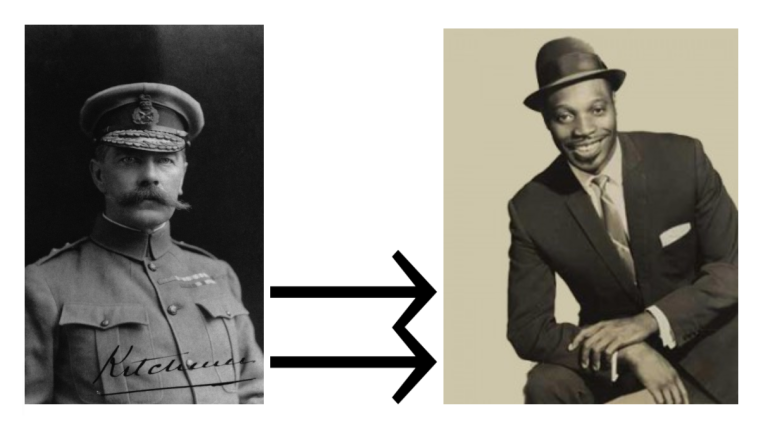
My Kitchener is finally ready to move beyond the debacle of 1916; embrace veteran artist Edward Schleimer’s “spirit of Berlinnova;” and stake our claim as the birthplace and capital of allophone Canada, multicultural Canada, racially diverse Canada. The city I hope to help build is ready to re-dedicate itself to the honour and memory of the other Lord Kitchener, the great 20th-century Calypsonian, lightly, with humour and flair, but fully cognisant of what a profound and thoroughly progressive change this could help bring about.
If you’re interested, please see my mid-August and top o’September 2020 CultKW posts Kitchener and Kitch.
 Martin de Groot